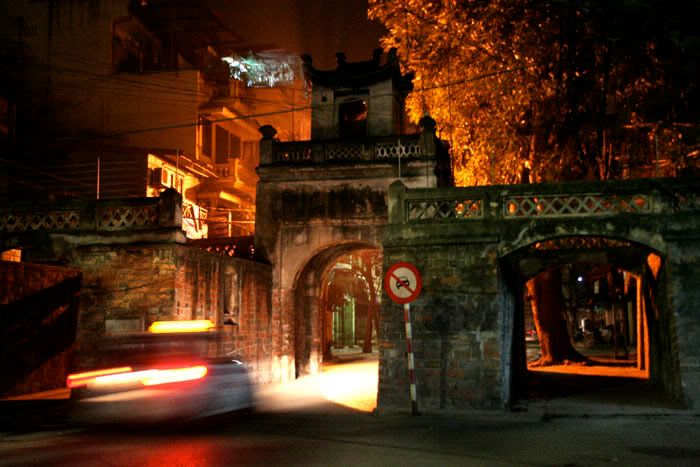
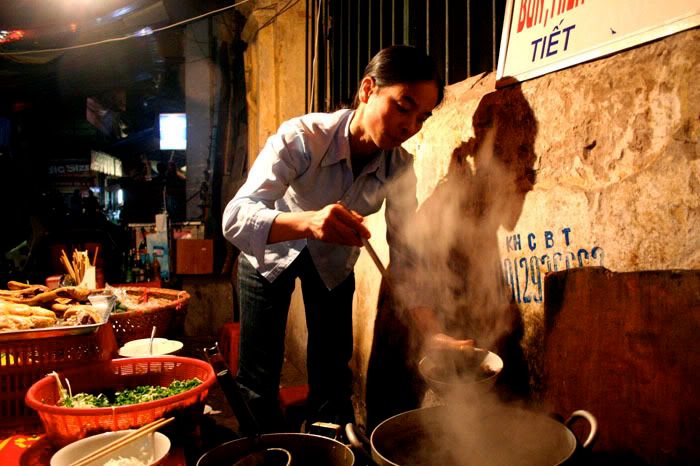
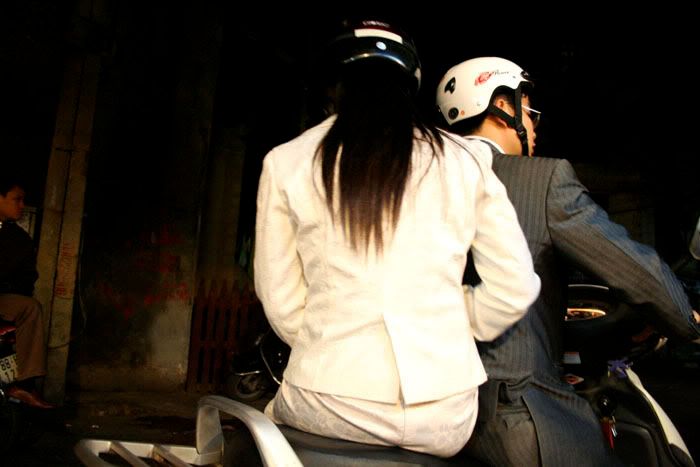
"Midnight is approaching, and while the peak of activity has passed, the basal metabolism that maintains life continues undiminished, producing the basso continuo of the city's moan, a monotonous sound that neither rises nor falls but is pregnant with foreboding.
"Our line of sight chooses an area of concentrated brightness and, focusing there, silently descends to it- a sea of neon colors. They call this place an "amusement district." [...] The district plays by its own rules at a time like this. The season is late autumn. No wind is blowing, but the air carries a chill. The date is just about to change."
-After Dark

I just finished reading Haruki Murakami's latest English-translated work,
After Dark. It is perhaps his most subtle novel, yet one of his most engaging and unsettling. Set over the course of one night in Tokyo, it documents the passage of twilight hours by some of the cities nocturnal inhabitants: an antisocial young girl, the gruff manager of a love hotel, a battered Chinese prostitute, and others. Written from the perspective of a detached viewer, it explores the landscape of quiet spaces that they occupy: anonymous diners, empty parks, and seedy hotel rooms. The novel is marked less by the occurrence of momentous events, and more by a feeling of anticipation and unease, that grows as the hours of the night tick slowly by. It's a beautiful description of the way that the city changes, and changes its inhabitants, after dark.

The nighttime landscape described in
After Dark reminds me of the world that I used to inhabit. Living in LA during college, I was almost wholly nocturnal. I'd stay up with friends on campus, go out to 24-hour diners, take night drives through the city, or just hang out watching tv in the student lounge or killing hours online in my dorm room. When I moved to Cape Town, my schedule had to change drastically. I didn't know anyone in the city, so there was no one to hang out with at night. I didn't have a car, so I was either confined to my neighborhood or forced to walk the streets alone at night. And I had neither a tv nor the internet, so when I was alone in my apartment, I was truly isolated.

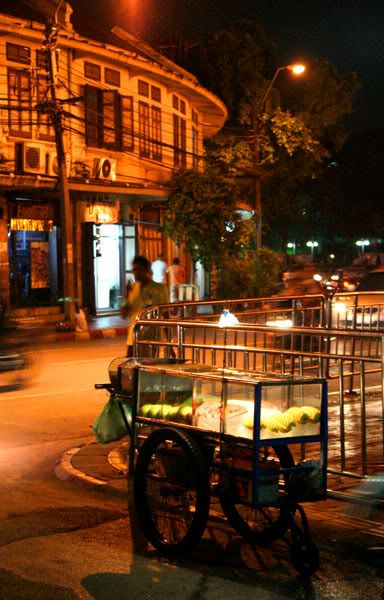
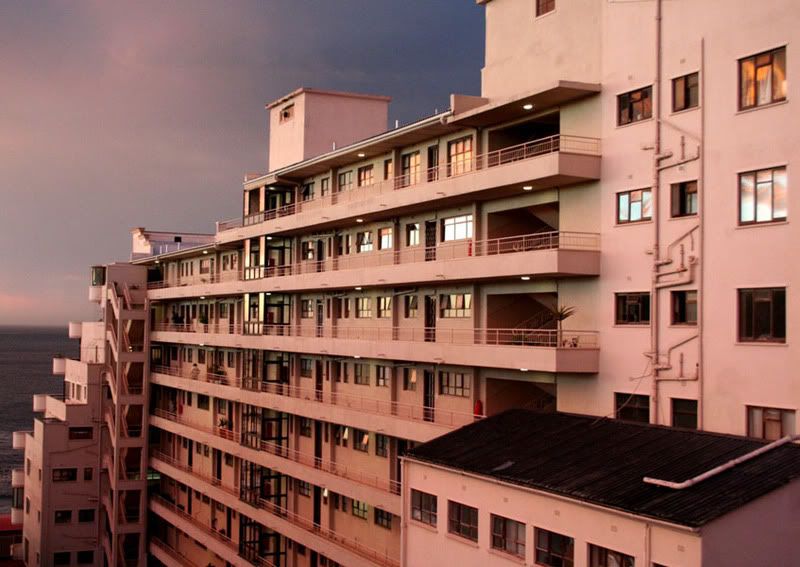
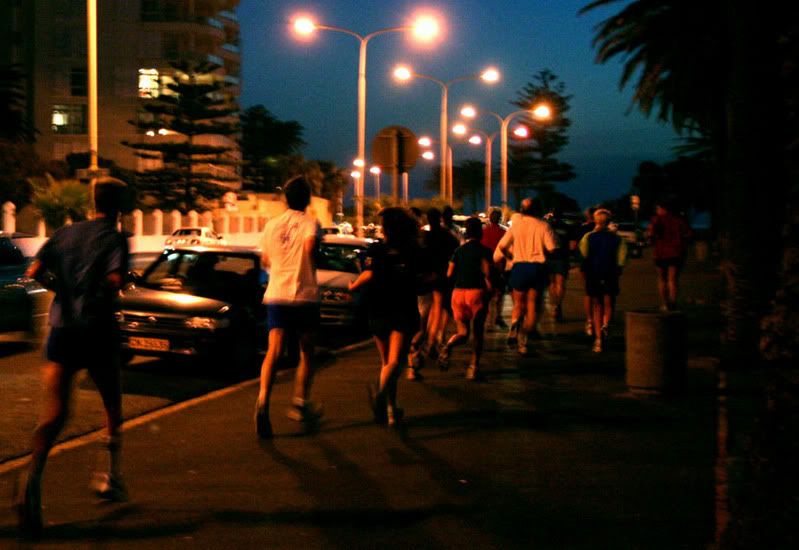
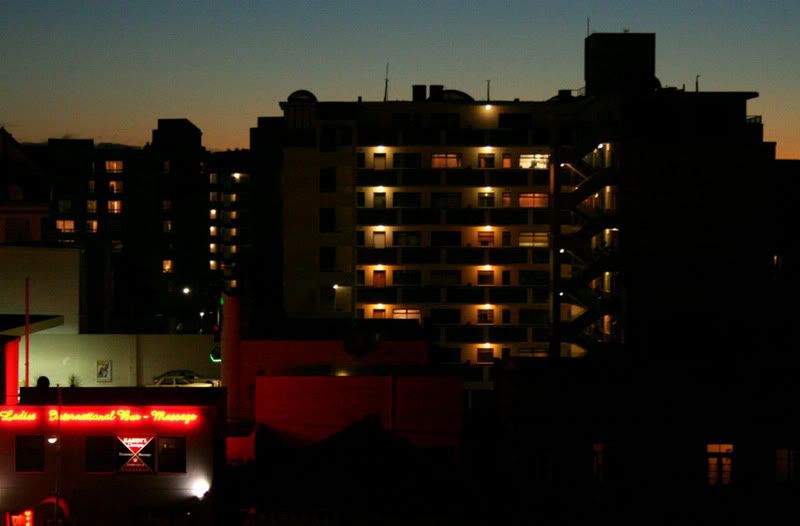
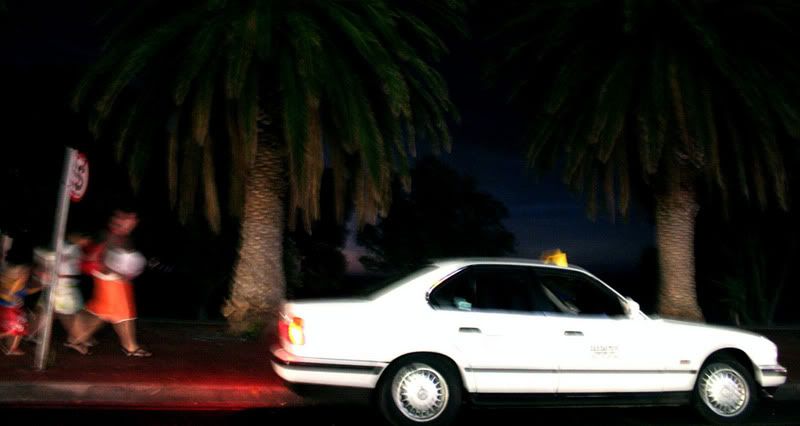
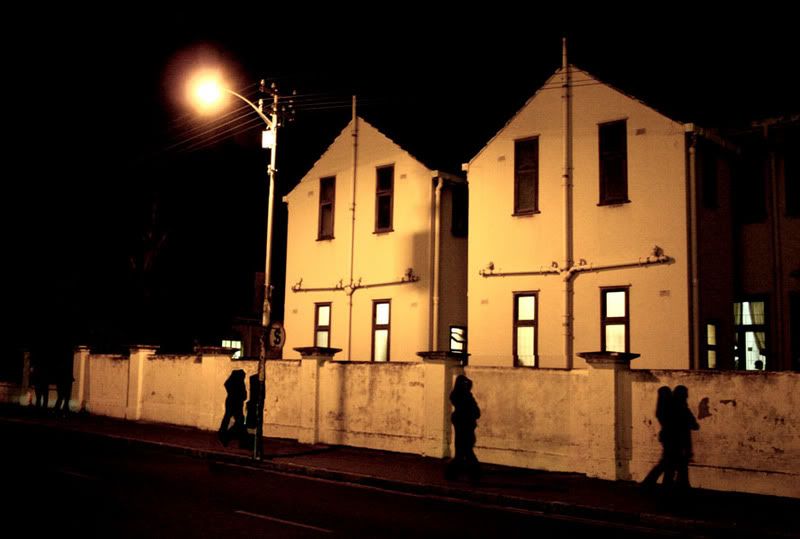
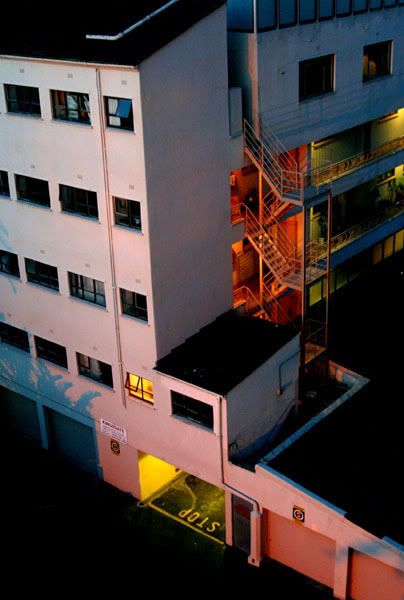
Photography was one of the key means through which I adjusted to life in Cape Town. I could document the city in effort to understand it, to make it familiar and make it my own. I carried my camera everywhere, documenting the city as I grew to know it. While I photographed different neighborhoods of the city throughout the day, my nighttime photographs were taken almost exclusively of my immediate neighborhood, Sea Point. These images, some taken from the windows of my high-rise apartment and some taken while exploring the neighborhood on foot, show the transformation of the neighborhood after the sun set.

I had chosen to live in Sea Point primarily for the view of the ocean the apartment offered, and for the strange charm of the area. It's a neighborhood of high-rise apartments, set on a rocky shelf between Lion's Head and the foamy green waters of the Atlantic. It's an odd part of town, with traces of a glamorous ocean-side history that has long since faded. Once the sun has lowered beyond the sea, and the lights of the apartment hallways have stuttered on, Sea Point changes quite drastically. Prostitutes and rent-boys stroll the promenade, drug-dealers become a bit more open in their offers, the alleys become a little seedier. More subtly, spaces became a little quieter, a little more desolate.

With my camera, I attempted to take a role much like the uninvolved observer of Murakami's novel. I was an ethnographer of quietly passing crowds, a portrait photographer for shadows. Through photographs of darkened apartment blocks and glowing street lights, I attempted to document not just the changing light and look of the neighborhood, but to show the side of the city that can't be seen during the day.


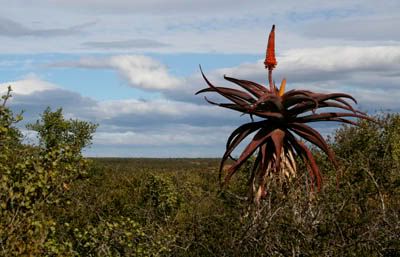 Before heading to Addo, we booked two drives: one for sunrise, and another for just after sunset. Our sunrise drive went well, and we saw loads of elephants, herds of buffalo, and several lions, along with two cubs. When we showed up for the night drive however, we were practically warned off by the driver. He had just taken another group around for a sun-downer drive, and had only seen two kudu. Plus, it was looking like it might rain. And if it rained enough, we’d have to turn around. We discussed it, and in the end decided to go out—if nothing else, it would be nice to be out in the bush in the dark.
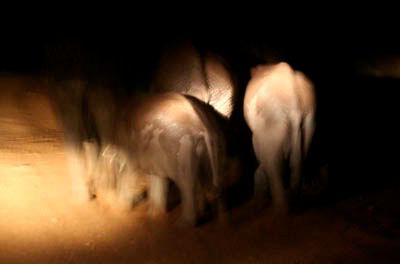
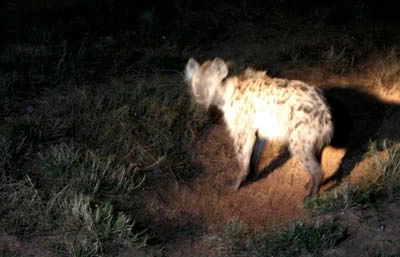 In the end, the drive was unbelievable. The rain settled over us, but never enough to send us back to camp. And perhaps out of enjoying the rain, the animals came out too. We saw black backed jackals, trotting through the scrub landscape. We saw several spotted hyenas, including two young cubs that gave in to their curiosity and prowled around our vehicle. We saw a porcupine, its massive coat of quills shimmying as it scurried to get out of the spotlights glare. And we even came across a herd of elephants, staying out long after their bedtime; they passed by close enough that we could practically touch their bristly skin.