Showing posts with label stories. Show all posts

Thursday, September 24, 2009

My honeymoon with lamb.

Despite the reputation small towns have for turning in early, we found ourselves among the first tables seated for dinner at Jessica’s. We glanced at the menu, though really, we’d both decided what we would have when we had scoped out the restaurant earlier that afternoon. We were each presented with a white plate topped with three slim cuts of steak. It was the first meal of our trip, so we had both chosen the sample of local specialty meats, dubbed the ‘Karoo Trio’. There was fillet of ostrich, served in a lime sauce; springbok loin with a sour cranberry compote; and Karoo lamb, presented simply in a light dressing of rosemary and red wine.

We took the meal slowly, enjoying rich mouthfuls of the trio between bites of roasted root vegetables and sips of a local shiraz. Everything was fantastic, yet as the meal wound down I noticed that we’d both saved a little of the lamb to savour last. It had been prepared beautifully, a thin layer of crisp fat on top contrasting with the meltingly rare meat underneath. The lamb truly stood out, however, in its flavour. For though the springbok was rich and delicious, it was almost indistinguishable from other game meats. The ostrich, similarly, could have passed for beef. The lamb, however, was distinct and recognizable for exactly what it was in each mouthful.

Walking back to our guesthouse, we observed the town of Montagu asleep. In the dark we could make out the town’s low skyline of Victorian houses, the steeple of the church punctuating it right in the middle. Montague is a humble dorp, and a good introduction into the charms of Karoo life. It was the first night of our honeymoon in the Karoo, the vast semi-desert that sprawls across much of South Africa’s interior. We had come for the desolate and romantic desert landscapes, and to relax in among the region’s small towns. But on a more material level, our route had been planned by out taste buds. We had come for the lamb.
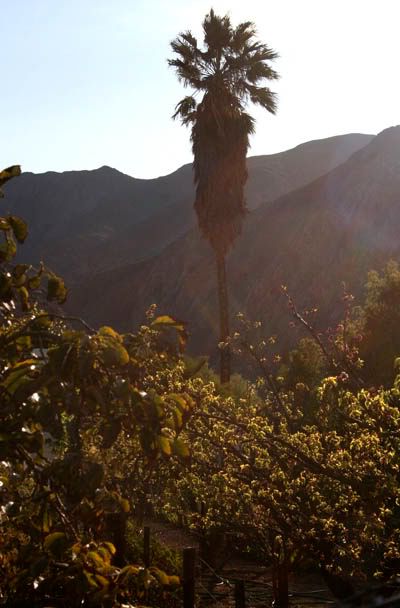
My husband Bordeaux and I are well paired in that we both love to travel, and in that we both think that tracking down a delicious meal is a perfectly acceptable excuse for doing so. We had come back to South Africa at the beginning of the year to get married; getting to know more about South Africa’s cuisine was a bonus. And in the process of learning about that cuisine, I had come to develop a love for lamb.

I really didn’t care for lamb when I was growing up, mostly, I suppose, because I don’t come from a culture that really eats it. The meat counters at the American grocery stores of my youth were divided up between beef, pork and chicken; in the same way in which whole turkeys suddenly made an appearance just before Thanksgiving, lamb was only given deli space around Easter. And even when served it irregularly at holidays, I had little appetite for its strange and unfamiliar flavour.

Thankfully, by time I married into a lamb eating culture, a lot had changed in my sense of taste. Along with a growing distrust in the lack of flavour in factory-produced meat, I had come to really enjoy the taste of lamb because, well, it actually tastes like lamb. There’s something wholesome and natural to it that seems to hark back to an era of farmhouse dinners and Sunday roasts, a subtle note of nourishing nostalgia in every bite. Karoo lamb is especially delicious; it seems to me to have a faint whiff of the dry spiced desert where the animals grazed.

Out of this newfound devotion, Karoo lamb had made its way to the centre of our wedding feast. A few days before the wedding we visited the town of Prince Albert, where we picked up two legs of lamb from a local butcher. Bordeaux’s father roasted them with sprigs of fresh rosemary and cloves of garlic, and as guests arrived they were greeted by its warm, welcoming scent. So when we planned a quick midweek honeymoon near our home in Cape Town, it seemed the perfect idea to centre the trip around following the lamb back to its natural habitat, and enjoying it at home in the Karoo.
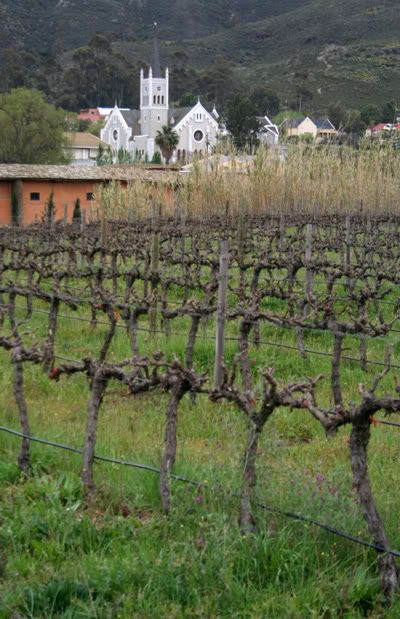

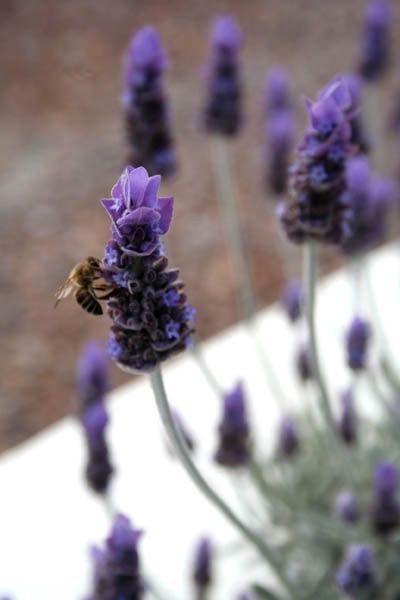
After leaving Montague we drove to Barrydale. We drove in under a sudden cloudburst, the town’s scent of wood fire and lavender mixing with the smell of the baked earth receiving the rain.

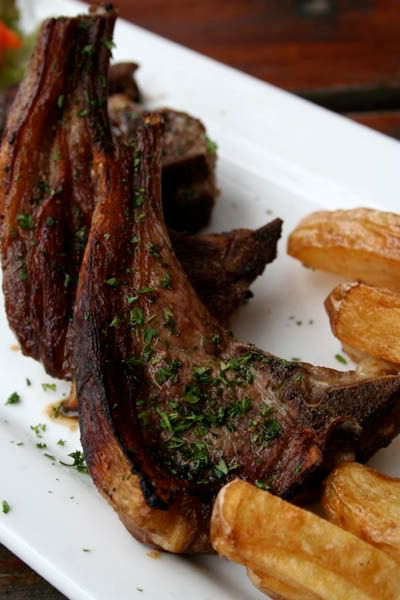
After checking into the local hotel, we headed for lunch at Clarke’s. The menu at this local institution is a selection of regional favourites, headlined by a lamb curry that Clarke himself tells his customers is the best thing he serves. But I was after something less complex, so I selected the lamb cutlets. They arrived as three neat packages of lamb practically caramelized by the grill, the meat hemmed in between bone and a thick ribbon of fat. The lamb was served with a vinaigrette made with fresh mint leaves, so different from the candied mint jelly of my childhood that I doubt they would recognize one another as distant relations. Splashed over the cutlets, it added a cool Mediterranean breeze to their grilled smokiness.

We sat that afternoon on our balcony, sipping a bottle of a regional red wine as the day slipped away. As dusk broke the hills around town blushed a pale shade of rose for one brilliant moment, then slipped into purple shadow. The sudden silencing of the sunset gave way to the rhythm of crickets, and the faint song of television sets blaring in distant living rooms.

After finishing the last sips of our wine, we headed to dinner up the hill at Jam Tarts. Amid the glow of a blazing wood fire pizza oven we enjoyed thick lamb burgers, the flavour of the meat melding with exotic spices of nutmeg and cinnamon. They were accompanied by florets of home-grown broccoli that had been prepared so simply that all you could taste was fresh and green. As we savoured the dinner, I felt almost positive that all of the meals on our honeymoon would be perfect.
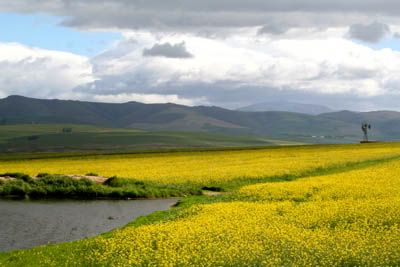

Unfortunately, they couldn’t be. Perhaps our mistake was in leaving the rustic, wholesome flavours of the Karoo? From Barrydale we drove through the Tradouws Pass, a winding canyon road brimming with golden flowering fynbos that took us out into the Overberg. Even someone without any knowledge of South African geography could guess that we had left the Karoo behind; the rugged wilderness of the desert had been replaced with an open sea of manicured fields. Green waves of wheat alternated with golden waves of canola, their placid surface rippled as wind rolled through their stalks. But even though we had left the Karoo, we spotted flocks of fluffy white sheep, a comforting sign that we were still in lamb country.
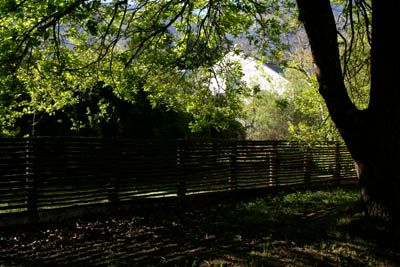
We spent that night in Greyton, a misplaced English hamlet set in a grove of similarly misplaced Bluegum trees. Though its quiet streets follow the same church-centred layout as Montague or Barrydale, the atmosphere in town felt oceans apart. Brilliantly green knee-high grass chokes the empty spaces between houses, a lush contrast to the dorps of the Karoo.

When evening arrived, we discovered that there was only one place in town open for dinner. Greyton is supposed to have some fantastic restaurants; this, unfortunately, was not one of them. We stopped by, checked out the menu, and then circled town hoping something else might still be open. No luck. So we headed back, took a table, and hoped the restaurant would defy our low expectations. We both opted for the lamb, which seemed the safest bet. Our plates were set before us. The potatoes had been reshaped into floury wedges as tasty as paper napkins. The vegetables had been boiled soft, and then in case they still looked too much like something that might have once come from the earth, covered in a gooey cheese sauce. We focused in on the meat. Mid-bite we paused, and looked to each other for confirmation. It was delicious. Beneath the smoky flavour of the grill was soft rare meat full of rich lamb flavour. It was natural and wholesome, the slight hint of wildness tempered by something nurturing and warm. It was a flavour as comforting as being welcomed back home. Or in my case, being welcomed to my new home.

Monday, January 21, 2008

There are dangerous people there.

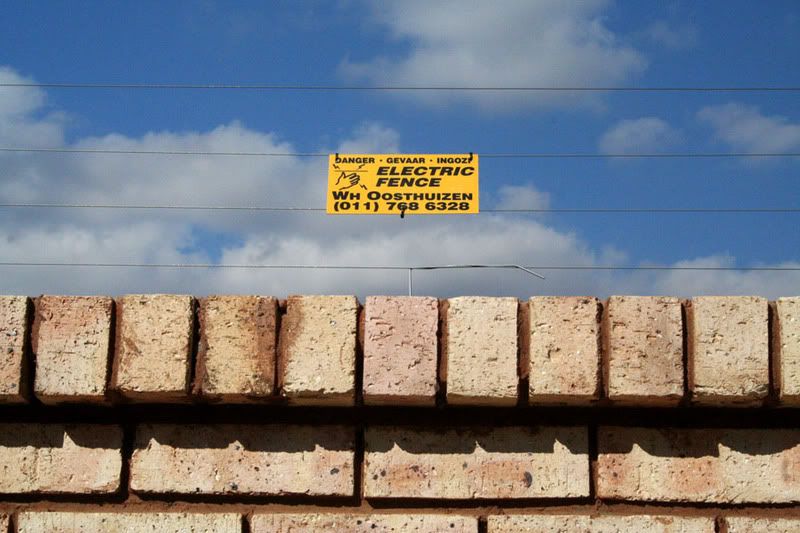
I held on the line, waiting for the woman at Greyhound’s call center to run my credit card numbers again. It was a bracing winter day in Johannesburg, the air lightly scented by the crisp woody smell of dry grass. As I waited to hear her voice, I distractedly scanned the nearly empty parking lot of the suburban condo complex. Like most residential spaces in Johannesburg, this community was gated, with a fortress-like barricade of burnt-ochre bricks surrounding it.

A heavy sigh on the line announced that she was back. “No, I’m sorry sir,” she said. “For some reason your credit card isn’t going through.”

I had been hoping to leave for Zimbabwe the next day, but nothing was working out as I had hoped. The earliest that a seat was available was on the following day, and now for some reason neither of my credit cards were working. “Well, can I pay in person somewhere?”

“Of course. You can come down to the ticket office at Park Station, but you must do it by tomorrow at 4 pm if you want this seat.”

I cringed. Park Station was in downtown Johannesburg. I was already nervous about going there- and now I’d have to do it two days in a row? “Can’t I just pay for the ticket when I come to board the bus?”

“Well, you can try to get a ticket then, but we can’t hold this one for you for that long. And I can almost guarantee that the bus will be full by then.” She seemed tired of dealing with me. “If I were you, I’d get downtown tomorrow.”

Few places terrify the suburban South African imagination as much as downtown Johannesburg. Though it had once been a lively grid of shopping streets and high-rise offices, many people now envisioned it as the epicenter of South Africa’s crime and violence. I was staying in Johannesburg with my friend Marc, and over dinner I told him of my plans. He was leaving early the next morning for a work trip, and wouldn’t be able to take me.
“Not that I’d go there with you if I could.” He shook his head. “First of all, I can’t believe you’re going to Zimbabwe. That place is a war zone.” Marc was prone to exaggeration, and a font of South African horror stories. “But you’re going to downtown Joburg? Man, you want to get killed. The people there are dangerous.”

Early the next morning, Marc dropped me at a guesthouse near central Johannesburg, and wished me luck. After checking into my room, I prepared for the trip downtown. I separated out some cash, took one credit card but left the other. Though I took people’s warnings about downtown Johannesburg with a measure of skepticism, in the back of my mind I kept the possibility that I was going to get mugged.

The day was starting to warm a little when I set out, the expansive blue of the sky not marred by even a single cloud. I walked to where I expected the bus stop to be, but once there, realized I had no idea which bus to take. Which direction was I going? I sat down to wait. After twenty minutes, I gave up. I wasn’t even sure if the bus I wanted stopped here. As I walked back toward my guesthouse, unsure of how to proceed, I saw the crowd of people waiting at the minibus taxi rank.

In Cape Town, I used minibus taxis all the time. To me, they seemed an ingenious system. The public bus network in Cape Town was terrible, so privately-owned minibus taxis plied the streets, an attendant shouting out their destinations and ushering passengers in. However, even in laid-back Cape Town, people gasped when they heard that I took the minibus taxis. To many white South Africans, they were little more than moving, metal coffins, associated with reckless drivers and fatal muggings. And this one would be going to downtown Johannesburg. I could imagine Marc’s reaction. “You’re taking a minibus- in Joburg?” But, as I saw it, I had no other choice.

I climbed into the first minibus that slowed to a stop, and ducked into a seat in the back. The attendant slammed the door shut, and we raced on. We zipped down the suburban expressway, through scratching tree branches and golden lawns. We stopped for more passengers: a young man in a corduroy blazer, and two round women in wool sweaters. We started up again, the women barely given time to squeeze in through the door before it was slammed shut. We curved through a neighborhood of quiet warehouses and factories, slid under a bridge, and suddenly arrived in downtown Joburg.

I had heard that all business had fled, leaving downtown Johannesburg deserted. From the ground, you’d never be able to tell. The sidewalks were packed to the point of over-spilling. Fast food outlets were doing a bust trade, and throngs of people were browsing between among shops and merchant’s stands.

I had tried to brush up on downtown’s layout in my guidebook, but looking out the window of the minibus taxi, I felt completely lost. Nothing in this urban chaos matched up to the layout sketched in my mind. I considered my options, and came up with only one: I would have to ask for help. It would label me as an outsider, make me vulnerable, but I didn’t have any other ideas. I leaned in toward the passenger sitting next to me, “Sorry, but are we going to be stopping at Park Station?”

“We won’t be stopping there, but we’ll be passing by.” He was an older man in a checked sweater, and he briefly studied my worried brow. “I’ll let you know when to hop off,” he offered.

We cut through the city blocks, between heavy traffic and crosswalks flooded with people. As we passed a dusty lot contained by chain-link, my fellow passenger called out to the driver, and let me know I should get off here. I jumped out as the taxi slowed, and found myself at a busy intersection, with no sense of direction. I couldn’t see Park Station over the shop’s awnings, and the road was to crowded for me to think. Suddenly I felt a hand on my shoulder, and before I could react, I was pulled down an alleyway.

I turned to see the face of the young man in the corduroy jacket, who had been sitting in front of me in the minibus. “You’re going to Park Station?” he checked.

“Yeah…”

“Alright, come this way.” He lead me down the alleyway, where sunlight was blocked out by tarps shading vendor’s stands. Merchants sold books, purses, designer shoes; street stands turned out richly spiced food for seated patrons. We turned, and he pulled me through an inconspicuous doorway. I found myself in the grandly arched terminal of Park Station.

“So where are you going?” he asked.

“Well, I need to buy a bus ticket- I’m heading to Zimbabwe.”
He nodded, and led me through the chilly corridors of the station to the bus terminal. I expected him to leave me there, but he simply stood waiting as I purchased my ticket. Though he had helped me immensely, I guiltily contemplated why he was doing it. What was in it for him? If he were planning on mugging me, why would he have waited for me to buy a ticket first? Was he expecting me to pay him for helping me?

“Well, where are you going now?” he asked after I stepped away from the counter, my ticket to Zimbabwe in hand.

I told him that I needed to catch a bus back to my guesthouse, and he immediately indicated for me to follow him again. We walked out of Park Station, and through a narrow shopping arcade. As we walked, he told me about himself. He was a student in filmmaking, and he hoped eventually to work for television. He asked me about my plans to visit Zimbabwe, my studies, and how I liked life in Cape Town.

“Yeah, I wouldn’t mind living down there,” he reflected. “But I think I’ll need to stay here- first for studies, then for work.” He stopped, and looked around. We stood in a courtyard hemmed in by stately buildings, where several two-story buses waiting expectantly. “Well, here we are.”
As he shook my hand, I couldn’t help feel confused. Where was the con, the appeal for money?
He smiled again as he nodded goodbye, but suddenly paused as if remembering something.

“You’re coming back to catch the bus tomorrow?” I nodded. He glanced a look back over his shoulder toward Park Station. “You really need to be more careful, especially if you have your suitcase. There are dangerous people there.”

Friday, January 11, 2008

Xander in seven pieces.*

1. I came into the world blue. I was born in August of 1983, unable to breathe due to a collapsed lung.

2. I have a small scar left by a Catholic Saint. As a toddler, I broke a terra cotta statue of St Francis; a shard pierced the right corner of my upper lip, leaving a visible scar that I still have.

3. My favorite book growing up was Alice in Wonderland. To some degree, I credit it with imbuing in me the interest in strange cultures and customs that lead me to study anthropology.

4. For five years I was a vegetarian. Then when I was about 18, I decided to stop.

5. For most of my childhood and early teenage years, I was very overweight. Then when I was about 17, I decided to stop.

6. I get heat stroke fairly easily when I go hiking. This happens even when I drink lots of water, eat salty snacks, and remember to rest in the shade. For some reason, I have a tendency to get heat stroke at major cultural and natural sights. I have gotten sick in the shadow of a pyramid at Tikal in Guatemala, while climbing the Livingstone escarpment in Malawi, after leaving the stone city of Great Zimbabwe, while ascending a trail at the Grand Canyon, and, most recently, after a day of getting lost at Khao Yai National Park in Thailand. Despite this, I still love hiking.

7. One of my childhood goals was to live on on every continent**. So far I've visited 5, and lived on 3. I hope the numbers will continue to grow.

*This entry is in response to a tag by the stylish Aphrochic, and the inspiring Caroline Gavin.
**Antarctica excluded. Sorry penguins.

Thursday, November 22, 2007

Thanksgiving among Bedouins.

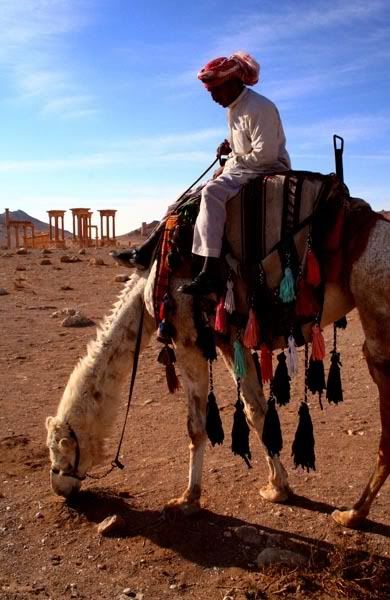
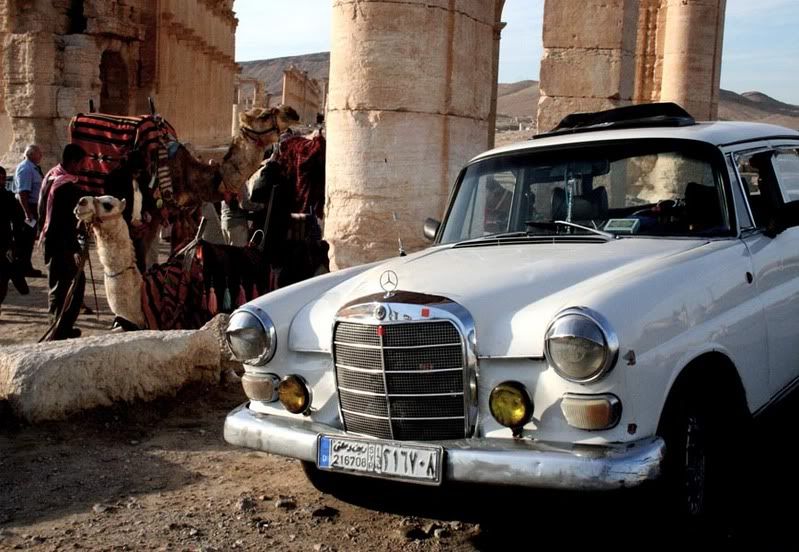
This year marks the third Thanksgiving that I have spent out of the Unites States. Last year I was in South Africa, and I barely noted the date as it passed by. The year previous, I was in Syria, halfway through a trip around the Middle East, and had a very memorable Thanksgiving in a desert oasis. I spent the evening having coffee with a small group of Bedouins, an all-white camel named Zenobia, and a mysterious German woman whose real name I never learned.

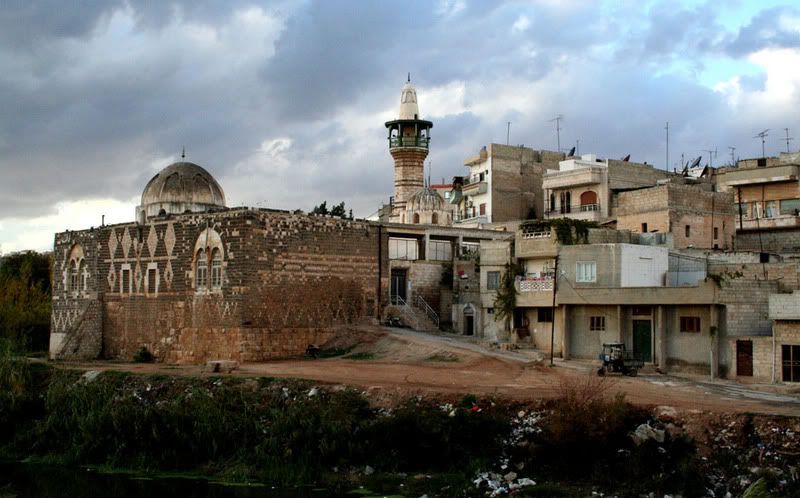
The day before, I had taken a minibus tour provided by my Hamas hotel out to see the Roman ruins of Afamia, and the crusader castle the Crac des Chevaliers. In the minibus with me there were several other guests from my hotel: two Danish men who were traveling together, an older Belgian man who was traveling alone, and a young German woman who introduced herself as Carmen.

"What do you do in Germany?" the Belgian man asked Carmen.

"I design blindfolds," she answered simply.

The ruins of Afamia were simple, but beautiful- as the early morning light filtered through the crowd cover, the columns stood strong in silhouette. We visited several small castles on the way to Crac des Chevaliers. Some looked tiny, their staunch bodies tightly fortified. Others had been used in the building of new towns, the old castle walls now providing sturdy foundations for modern housing.

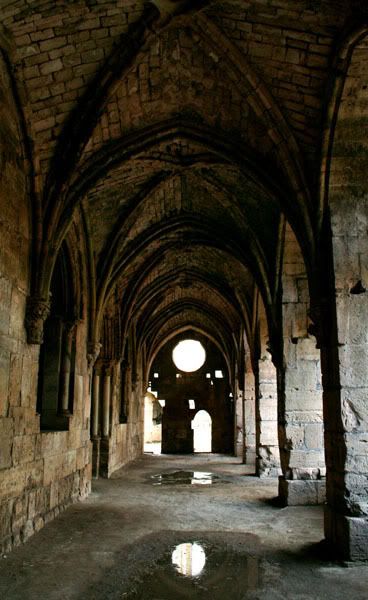
Crac des Chevaliers itself was astounding, a massive complex of outer walls, inner sanctums, and a mix of Gothic and Romanesque details. Amazingly, we were the only people there; a small group of tourists in a vast and abandoned tourist site.

On the minibus ride back to Hamas, we discussed our onward travel plans. Carmen, the Danes and I were all planning on heading to Palmyra. The Belgian had already been.

"Palmyra is overrated," he stated dismissively.

"Oh, you would probably say that the pyramids are overrated," Carmen sighed.

"Yes- the pyramids are overrated," he responded.

Carmen leaned forward to my seat, and asked me how I was getting to Palmyra. "Perhaps we should travel together," she suggested.

Back at the hotel, we disbanded, Carmen and I setting up loose plans to meet in the morning. After dinner I returned to my hotel room; I switched on the tv, and found a channel showing English language programming. I settled in for an incongruous evening, watching Kindergarten Cop and revisiting the sights of the day in my head.

I woke up on Thanksgiving morning to find that Carmen had already departed, leaving me a note at reception. "I woke up early," it read, "but saw that the lights in your room were off, so I have gone ahead. Carmen."

I caught a taxi to the bus station, and caught a minibus to the transport hub of Homs. There, I caught a cab to from one bus station to another, and located the bus heading toward Palmyra. The inside of the bus was heavily decorated, with elaborate drapes, plastic fruit, and small painted cherubs. Two young boys sat at the drivers side; while we waited for bus to fill up, they asked me where I was from, and imitated the sound of bomber jets upon hearing my response.

Leaving Homs, the landscape abruptly transitioned from scrubby forest into harsh desert, the pines and craggy rocks thinning out as the horizon became a razor-edge of burning red sand.

Upon arriving in Palmyra, I located a cheap hotel at the edge of the ruins. After a short rest on one of the twin beds, I headed out to look around. As I walked through the lobby, the clerk stopped me, and handed me a slip of paper. Confused, I unfolded it.

"Ah, so we are staying at the same hotel! If you wish to have coffee in a Bedouin tent, meet me at 9 o' clock in front of the Hotel Zenobia. Carmen."

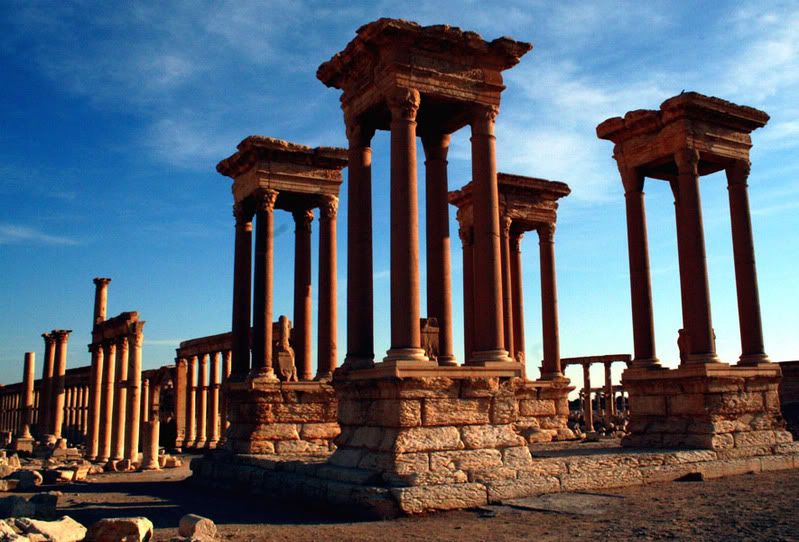
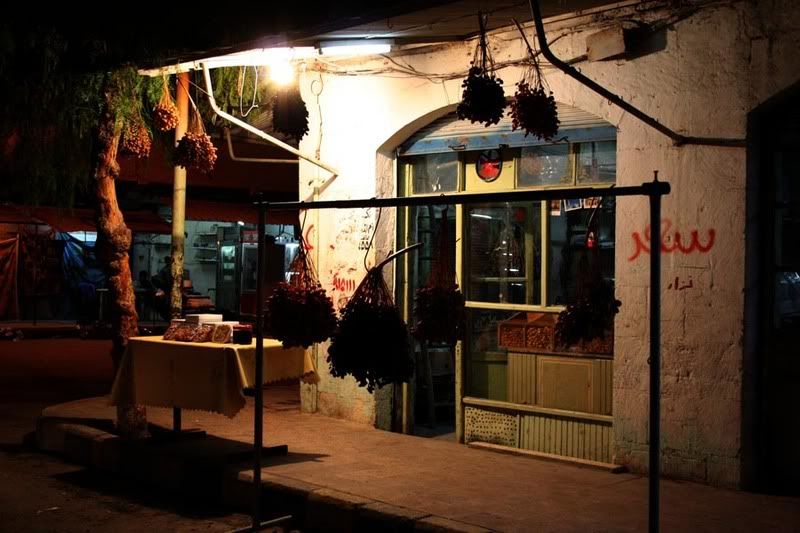
Palmyra, as it is called in English, is so named because it was founded at an oasis of Date Palms- also giving it its Arabic name, Tadmor, meaning place of dates. It was once the center of a vast trading network that stretched from China to Rome, and a cosmopolitan meeting place for disparate cultures.

Traveling in Syria gives one the sense of physically seeing the past, one layer piled upon another layer. Atop a distant hill sat a medieval castle, which looked down over the desert ruins below. The fragments of ancient Palmyra itself looked an odd cross of Egyptian and Roman- Western forms redone in a pale sandstone.

In the distance I saw two men talking; one was on foot, and the other sat astride a pure white camel. He approached me, and waved an arm to signal me hello. He introduced himself: he was Mahmoud, a Bedouin. He gave me his card, with his photo, cellphone, and fax. He offered his tours, and a homestay at his camp. I took the card, and told him that I would consider it for tomorrow, that I wasn't sure if I would stay in Palmyra for a second day.

I felt obliged to stay among the ruins until sunset, so I found an isolated spot and fixed my gaze on a distant pair of tombs. Nestled at the base of a hill, the two towers both had an unusual sloping form that made them look even more unreal than their setting already did.

Heading back into town, I looked around the main tourist drag for dinner, but found only empty dives decorated in Bedouin kitsch. Scanning them, I wondered which Bedouin tent Carmen wanted us to have coffee in. Each tourist diner had one, hoping to lure in visitors with their exotic florescent charm. Finding little that appealed to me, I bought a bag of dates, and headed back to my hotel room.

A few minutes before 9, I left my room and walked out to the Hotel Zenobia. It was so dark that all I could see was the faint silhouette of the ruins against the distant mountains.

I was wondering whether I should look inside the hotel when I saw her approaching, her bulbous down jacket looking so uneven on her thin legs.

Upon arriving, she explained to me that she had met a Bedouin man who had invited her for coffee, and she hadn't wanted to go alone.

"How did you know that I was staying in the same hotel as you?" I asked her as we waited.

She smiled coyly. "Haven't you ever heard of a woman's intuition?" She paused, and scanned the starry sky. "I saw your passport behind the front desk."

A motorbike puttered up the road, and into the drive. A handsome man with dark eyes stepped off the back, and the driver u-turned and headed back the way he came.

As he came nearer, I realized that it was Mahmoud- the man who had given me his card that afternoon. "Ah, Susan," the man said. She shot a look at me. "I'm glad you came."

We followed him through the darkened ruins back to his camp. Fragments of temples and shards of broken columns appeared out of the blackness, taking form as we grew near, and disappearing again as we walked further.

At his camp, we found three other men waiting for around a fire. Before taking us to join them, Mahmoud introduced us to his camels. He proudly introduced us to Zenobia, the white camel that I had seen him on earlier.

"She is a very special camel," Mahmoud told us. "My favorite. Very special to me."

"Because she's so beautiful?" I asked.

"Because she is so smart," he said, patting her on the neck.

The other men had prepared coffee for our arrival, and poured us each a cup as they warmly invited us to sit. The night air was already crisp, and the hot cup warmed my hands quickly. The coffee was thick, coarse and delicious, richly spiced with cardamom. From a distance, Zenobia and the other camels watched over our conversation.

"What do you do in Germany, Susan?" Mahmoud asked Carmen.

"I test drive speed boats," she answered simply.

Mahmoud impressed us with his language skills, offering phrases in German, Italian, Spanish, and French. He explained that while he had settled at Palmyra in order to make money off of the tourist trade, his parents were true Bedouins, who lived as nomads in the desert.

The evening grew late as we talked, and Carmen eventually indicated that we should head back to the hotel. We talked little as crossed the ruins again. She asked me my age, and raised her eyebrows exaggeratedly when I told her. "I could never have done what you're doing when I was your age," she said. She said that she was planning on staying in Palmyra another day. She wanted to see some of the further ruins, and perhaps to spend a night out in Mahmoud's camp. "Perhaps I'll see you around tomorrow," she said as we parted in the hotel hallway.

The next morning, I woke early and caught a bus heading toward Lebanon, leaving no notes behind.