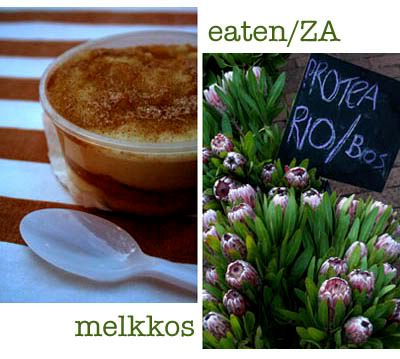
 For a final breakfast in South Africa, we woke up early and headed out to Pretoria's Boeremark. We got there just as the sky was just starting to lighten, some of the late-coming vendors still setting up their stalls and laying out their produce. It had been raining the day before, and though the morning sky was clear there were still gaping mud puddles and a slight damp chill in the air. This made it the perfect morning to have a bowl of melkkos. A flour based porridge layered with strata of cinnamon and sugar, melkkos satisfies on all my requirements for a chilly morning meal: nourishing, filling, with just the right element of sweetness.

Showing posts with label South African food and coffee. Show all posts
Showing posts with label South African food and coffee. Show all posts
Monday, April 19, 2010
eatingCULTURE/eaten: Melkkos.
For a final breakfast in South Africa, we woke up early and headed out to Pretoria's Boeremark. We got there just as the sky was just starting to lighten, some of the late-coming vendors still setting up their stalls and laying out their produce. It had been raining the day before, and though the morning sky was clear there were still gaping mud puddles and a slight damp chill in the air. This made it the perfect morning to have a bowl of melkkos. A flour based porridge layered with strata of cinnamon and sugar, melkkos satisfies on all my requirements for a chilly morning meal: nourishing, filling, with just the right element of sweetness.

Monday, November 23, 2009
Walking out of a restaurant.
 Last weekend Bordeaux and I decided to get out of town for lunch, so we drove up to the Winelands to have lunch at a wine estate. We'd done a little research, and picked a place that came recommended in some eating guides. But when we got there and looked at the menu, we were a little disappointed. The menu seemed a bit pretentious, trying too hard. The most succint problem with the menu was that there was something with 'wonton cups' in the appetizers-- and while I obviously have no problems with Asian food, I find it a bit tiresome how frequently restaurants in Cape Town add one token Asian-inspired item to their menu just to show how wordly and sophisticated they are.* Basically though, we were after a simple, delicious, lazy Sunday lunch, and this obviously wasn't the place for it.
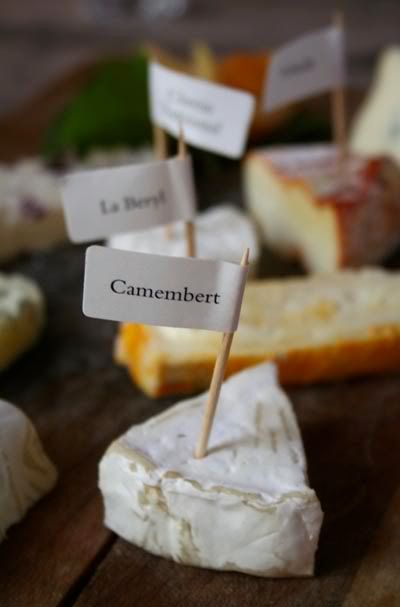
So anyway, we walked out. We drove a bit to Fairview, a winery and cheese farm near Paarl, which we have visited often and always enjoy. We shared a massive platter of their hand-crafted cheeses (pictured above), which included a mature and flavourful la beryl, creamy camembert, and an incredibly rich and dessert-like cream cheese with cranberries. We ate it with crusty bread, a bitter preserved orange, slices of cured meat, and a chilled bottle of wine. Perfect for a late Sunday lunch on a very warm afternoon.
A few years ago, I never would have been able to walk out of a restaurant. I will admit it's a little tacky maybe, and I probably would have been a bit embarrassed about what other diners would think. But now I actually find something-- in an odd way-- satisfying about walking out of a restaurant. I suppose I've gotten to the point that I really care much less about what other people think, and I've also come to really appreciate the value of a good meal spent with someone I care about. I don't think it's worth wasting time on mediocrity, or settling for something less when there are much better options around. Admittedly, we could have been surprised. There's a chance that had we stayed we might have ended up liking what we ate, but we also just knew that we could have a much more enjoyable meal elsewhere. It's about realizing that enjoying the limited time I have is more important than worrying about my pride.
With all of that said, my grandparents used to walk out of movies that they found morally objectionable. I think their morals got stricter and movies more crass to the point that they would usually leave the theatre about five minutes in. So maybe it's actually just genetic, and I'm on a very dangerous road?
*And yet, good, straight-forward Asian food is very difficult to find in Cape Town. More on that some other time, perhaps.
Friday, November 20, 2009
culturedPRIMITIVE/stockist: Pinotage.
The global guide to stocking your pantry.
 One of the pleasures of the Cape lifestyle is that wine is plentiful and affordable. However, while we very much enjoy a regular glass of wine at sundown, we're really not proper wine drinkers. We mostly buy bottles on whim rather than on research, we drink out of whatever glasses are at hand, and on the off chance we buy a bottle that isn't a screw-top, we pull the cork with a well-travelled swiss army knife. But maybe that's why we're so fond of pinotage.
Pinotage is a distinctly South African wine. Not only in its origins (it was first cultivated in Stellenbosch in the 1920s), but in its character as well-- this isn't a delicate wine. It has an earthy smoky flavour flecked with hints of tropical fruit. It's a full-bodied combination that makes it ideal for pairing with heavy meats, game, and spicy flavours. In other words, you can serve it at your braai, and it will actually complement your boerwors.
 One of the pleasures of the Cape lifestyle is that wine is plentiful and affordable. However, while we very much enjoy a regular glass of wine at sundown, we're really not proper wine drinkers. We mostly buy bottles on whim rather than on research, we drink out of whatever glasses are at hand, and on the off chance we buy a bottle that isn't a screw-top, we pull the cork with a well-travelled swiss army knife. But maybe that's why we're so fond of pinotage.
Pinotage is a distinctly South African wine. Not only in its origins (it was first cultivated in Stellenbosch in the 1920s), but in its character as well-- this isn't a delicate wine. It has an earthy smoky flavour flecked with hints of tropical fruit. It's a full-bodied combination that makes it ideal for pairing with heavy meats, game, and spicy flavours. In other words, you can serve it at your braai, and it will actually complement your boerwors.
Monday, November 16, 2009
eatingCULTURE/eaten: Beskuit.
Eating the world, one bite at a time.
 No proper South African tea is complete unless attended by some beskuit. Known in English as a rusk, beskuit is the Afrikaans equivalent of biscotti: a biscuit that has been twice baked to dry it out and harden it, making it ideal for dipping into a warm mug of tee or koffie. Though classic beskuit have a relatively simple ingredient list (mainly flour, margarine, and buttermilk), they can be further enhanced with added seeds, dried fruit, or cereals. Pictured above are anise beskuit, made with self-raising flour for a more pillowy texture, and flavoured lightly with anise. If you're curious to try beskuit in South Africa, give the boxes in the grocery store a miss, and seek out some proper home-baked beskuit from a farm stall, a church bazaar, or a neighbourhood cafe; it will make all the difference for enjoying your tea.
For further reading, or to attempt some beskuit of your own, check out this recipe on Marita Says.
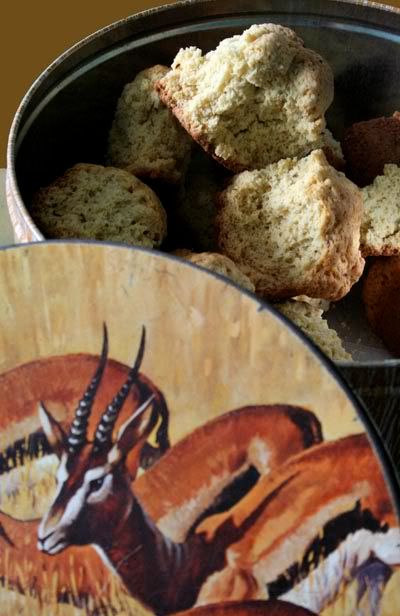 No proper South African tea is complete unless attended by some beskuit. Known in English as a rusk, beskuit is the Afrikaans equivalent of biscotti: a biscuit that has been twice baked to dry it out and harden it, making it ideal for dipping into a warm mug of tee or koffie. Though classic beskuit have a relatively simple ingredient list (mainly flour, margarine, and buttermilk), they can be further enhanced with added seeds, dried fruit, or cereals. Pictured above are anise beskuit, made with self-raising flour for a more pillowy texture, and flavoured lightly with anise. If you're curious to try beskuit in South Africa, give the boxes in the grocery store a miss, and seek out some proper home-baked beskuit from a farm stall, a church bazaar, or a neighbourhood cafe; it will make all the difference for enjoying your tea.
For further reading, or to attempt some beskuit of your own, check out this recipe on Marita Says.
Monday, November 02, 2009
culturedPRIMITIVE/stockist: Rooibos.
The global guide to stocking your pantry.
 I am generally a coffee drinker, but I do occasionally take tea. In South Africa, that often takes the form of rooibos, a brewed beverage indigenous to the Western Cape. Rooibos is of course known outside of its country of origin; it is perhaps one of the few products with an Afrikaans name to successfully branch into the international market. That name, by the way, translates as 'red bush', an evocative descriptor of the rusty-earth colour the needles take once they have been oxidized. It is available in many brands, in organic loose-leaf or chai flavoured tea bags, and even in an espresso like form, but I rather favour Eleven O'Clock Rooibos for its no frills tea, and its attractively vintage graphics. Outside of South Africa rooibos is mainly sipped by the health crowd (it is high in anti-oxidants and caffeine free) and is generally taken black, but here in the Western Cape we take it in the proper South African way: with a little milk and honey, and preferably, a crunchy buttermilk beskuit on the side.
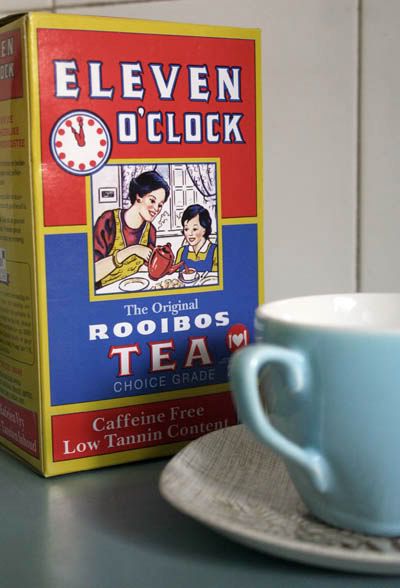 I am generally a coffee drinker, but I do occasionally take tea. In South Africa, that often takes the form of rooibos, a brewed beverage indigenous to the Western Cape. Rooibos is of course known outside of its country of origin; it is perhaps one of the few products with an Afrikaans name to successfully branch into the international market. That name, by the way, translates as 'red bush', an evocative descriptor of the rusty-earth colour the needles take once they have been oxidized. It is available in many brands, in organic loose-leaf or chai flavoured tea bags, and even in an espresso like form, but I rather favour Eleven O'Clock Rooibos for its no frills tea, and its attractively vintage graphics. Outside of South Africa rooibos is mainly sipped by the health crowd (it is high in anti-oxidants and caffeine free) and is generally taken black, but here in the Western Cape we take it in the proper South African way: with a little milk and honey, and preferably, a crunchy buttermilk beskuit on the side.
Friday, October 02, 2009
eatingCULTURE/tastes: Full English.
Opinions in eating.
 A few weeks ago, a Cape Town food reviewer for the Mail & Guardian wrote about where to get a good breakfast in Cape Town. While he actually picked some fantastic spots, he kind of lost me when he stated that South Africa had ‘luckily’ inherited the tradition of the Full English Breakfast. I don’t know if I’d call that luck, really. While an English breakfast can be a fun late-morning binge every now and then, a big plateful of greasy meats, over cooked vegetables, and bland eggs is actually a rather unappetizing thing to be greeted with as you wake up. Perhaps worse, I find that the flavours of bacon and sautéed mushrooms mix terribly with coffee.
This came to mind recently while Bordeaux and I were on our little honeymoon in the Karoo. We were served a Full English Breakfast at our first guesthouse, and while they’d done an attractive job with the presentation, we both groaned with the thought of being served the exact same stodgy breakfast for every morning of the trip.
 Thankfully, our other guesthouses came through for us. The hotel in Barrydale served a delicious vegetable frittata garnished with lots of crisp herbs and edible flowers—not only did it look beautiful, but it was really nice to start the day with something so fresh. Our guesthouse in Greyton gave us options: the Full English was there, but we opted instead for yogurt with muesli and fresh fruit. It’s simple, but it’s about my favourite way to start the day, really (and it goes perfectly with a cup of coffee).
 There are so many great options for breakfast—pancakes, omelets, French toast, home-made granola, fruit salad, poached eggs, Dutch babies, salmon and crème freche with a little dill-- I don’t know why Full English is so popular. And it’s not that I’m opposed to red meat in the morning, either. A scramble of some eggs and boerewors (South African sausage) would at least be a fun local take on the Full English (A Full Afrikaner Breakfast?). Basically, I just think that a Full English is as uncreative as you get with breakfast—especially for a guesthouse. Part of traveling is experiencing different places –why not serve a breakfast that makes use of seasonal produce from the area, or unique local ingredients? Part of the fun of coming to New Mexico is waking up to blue corn pancakes—I bet there could be some fantastic breakfasts made to reflect the flavours of South Africa.
What’s your favourite breakfast? Have you ever had any really fantastic breakfasts while you were traveling?
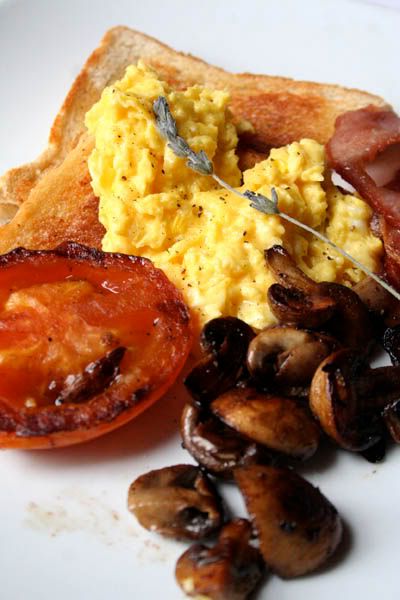 A few weeks ago, a Cape Town food reviewer for the Mail & Guardian wrote about where to get a good breakfast in Cape Town. While he actually picked some fantastic spots, he kind of lost me when he stated that South Africa had ‘luckily’ inherited the tradition of the Full English Breakfast. I don’t know if I’d call that luck, really. While an English breakfast can be a fun late-morning binge every now and then, a big plateful of greasy meats, over cooked vegetables, and bland eggs is actually a rather unappetizing thing to be greeted with as you wake up. Perhaps worse, I find that the flavours of bacon and sautéed mushrooms mix terribly with coffee.
This came to mind recently while Bordeaux and I were on our little honeymoon in the Karoo. We were served a Full English Breakfast at our first guesthouse, and while they’d done an attractive job with the presentation, we both groaned with the thought of being served the exact same stodgy breakfast for every morning of the trip.
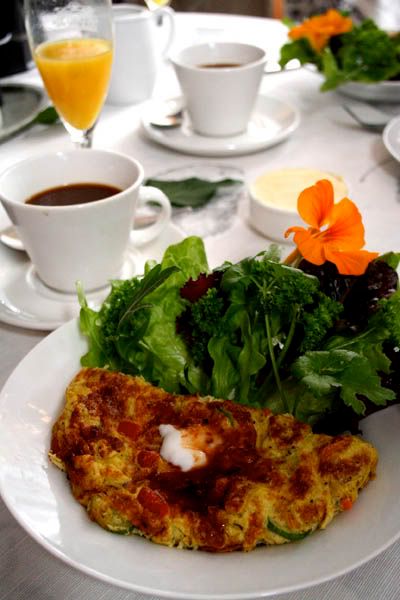 Thankfully, our other guesthouses came through for us. The hotel in Barrydale served a delicious vegetable frittata garnished with lots of crisp herbs and edible flowers—not only did it look beautiful, but it was really nice to start the day with something so fresh. Our guesthouse in Greyton gave us options: the Full English was there, but we opted instead for yogurt with muesli and fresh fruit. It’s simple, but it’s about my favourite way to start the day, really (and it goes perfectly with a cup of coffee).
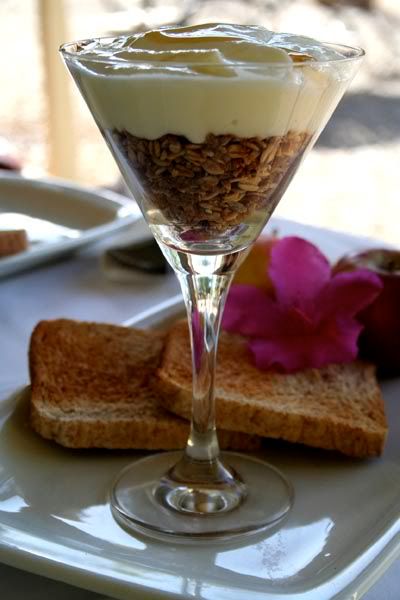 There are so many great options for breakfast—pancakes, omelets, French toast, home-made granola, fruit salad, poached eggs, Dutch babies, salmon and crème freche with a little dill-- I don’t know why Full English is so popular. And it’s not that I’m opposed to red meat in the morning, either. A scramble of some eggs and boerewors (South African sausage) would at least be a fun local take on the Full English (A Full Afrikaner Breakfast?). Basically, I just think that a Full English is as uncreative as you get with breakfast—especially for a guesthouse. Part of traveling is experiencing different places –why not serve a breakfast that makes use of seasonal produce from the area, or unique local ingredients? Part of the fun of coming to New Mexico is waking up to blue corn pancakes—I bet there could be some fantastic breakfasts made to reflect the flavours of South Africa.
What’s your favourite breakfast? Have you ever had any really fantastic breakfasts while you were traveling?
Thursday, September 24, 2009
My honeymoon with lamb.
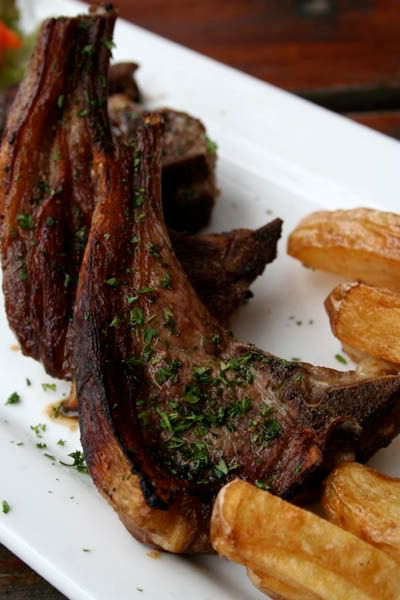 Despite the reputation small towns have for turning in early, we found ourselves among the first tables seated for dinner at Jessica’s. We glanced at the menu, though really, we’d both decided what we would have when we had scoped out the restaurant earlier that afternoon. We were each presented with a white plate topped with three slim cuts of steak. It was the first meal of our trip, so we had both chosen the sample of local specialty meats, dubbed the ‘Karoo Trio’. There was fillet of ostrich, served in a lime sauce; springbok loin with a sour cranberry compote; and Karoo lamb, presented simply in a light dressing of rosemary and red wine.
We took the meal slowly, enjoying rich mouthfuls of the trio between bites of roasted root vegetables and sips of a local shiraz. Everything was fantastic, yet as the meal wound down I noticed that we’d both saved a little of the lamb to savour last. It had been prepared beautifully, a thin layer of crisp fat on top contrasting with the meltingly rare meat underneath. The lamb truly stood out, however, in its flavour. For though the springbok was rich and delicious, it was almost indistinguishable from other game meats. The ostrich, similarly, could have passed for beef. The lamb, however, was distinct and recognizable for exactly what it was in each mouthful.
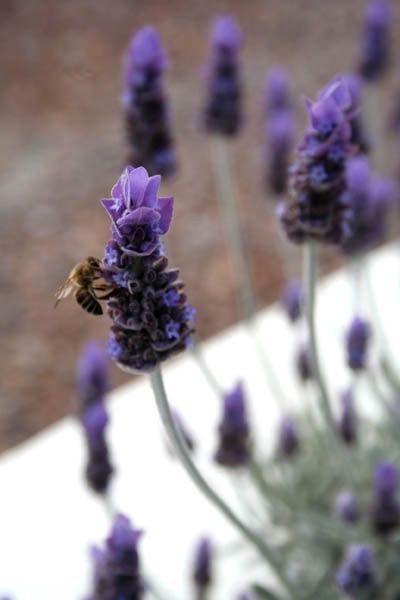 Walking back to our guesthouse, we observed the town of Montagu asleep. In the dark we could make out the town’s low skyline of Victorian houses, the steeple of the church punctuating it right in the middle. Montague is a humble dorp, and a good introduction into the charms of Karoo life. It was the first night of our honeymoon in the Karoo, the vast semi-desert that sprawls across much of South Africa’s interior. We had come for the desolate and romantic desert landscapes, and to relax in among the region’s small towns. But on a more material level, our route had been planned by out taste buds. We had come for the lamb.
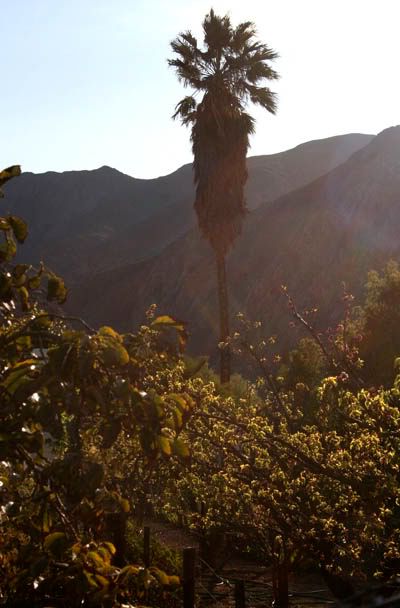 My husband Bordeaux and I are well paired in that we both love to travel, and in that we both think that tracking down a delicious meal is a perfectly acceptable excuse for doing so. We had come back to South Africa at the beginning of the year to get married; getting to know more about South Africa’s cuisine was a bonus. And in the process of learning about that cuisine, I had come to develop a love for lamb.
I really didn’t care for lamb when I was growing up, mostly, I suppose, because I don’t come from a culture that really eats it. The meat counters at the American grocery stores of my youth were divided up between beef, pork and chicken; in the same way in which whole turkeys suddenly made an appearance just before Thanksgiving, lamb was only given deli space around Easter. And even when served it irregularly at holidays, I had little appetite for its strange and unfamiliar flavour.
Thankfully, by time I married into a lamb eating culture, a lot had changed in my sense of taste. Along with a growing distrust in the lack of flavour in factory-produced meat, I had come to really enjoy the taste of lamb because, well, it actually tastes like lamb. There’s something wholesome and natural to it that seems to hark back to an era of farmhouse dinners and Sunday roasts, a subtle note of nourishing nostalgia in every bite. Karoo lamb is especially delicious; it seems to me to have a faint whiff of the dry spiced desert where the animals grazed.
Out of this newfound devotion, Karoo lamb had made its way to the centre of our wedding feast. A few days before the wedding we visited the town of Prince Albert, where we picked up two legs of lamb from a local butcher. Bordeaux’s father roasted them with sprigs of fresh rosemary and cloves of garlic, and as guests arrived they were greeted by its warm, welcoming scent. So when we planned a quick midweek honeymoon near our home in Cape Town, it seemed the perfect idea to centre the trip around following the lamb back to its natural habitat, and enjoying it at home in the Karoo.
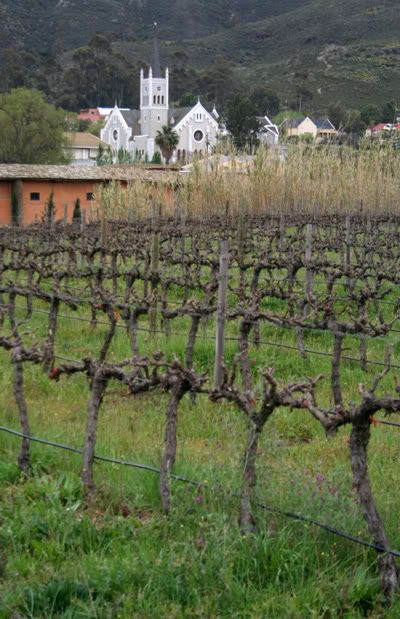 After leaving Montague we drove to Barrydale. We drove in under a sudden cloudburst, the town’s scent of wood fire and lavender mixing with the smell of the baked earth receiving the rain.
After checking into the local hotel, we headed for lunch at Clarke’s. The menu at this local institution is a selection of regional favourites, headlined by a lamb curry that Clarke himself tells his customers is the best thing he serves. But I was after something less complex, so I selected the lamb cutlets. They arrived as three neat packages of lamb practically caramelized by the grill, the meat hemmed in between bone and a thick ribbon of fat. The lamb was served with a vinaigrette made with fresh mint leaves, so different from the candied mint jelly of my childhood that I doubt they would recognize one another as distant relations. Splashed over the cutlets, it added a cool Mediterranean breeze to their grilled smokiness.
We sat that afternoon on our balcony, sipping a bottle of a regional red wine as the day slipped away. As dusk broke the hills around town blushed a pale shade of rose for one brilliant moment, then slipped into purple shadow. The sudden silencing of the sunset gave way to the rhythm of crickets, and the faint song of television sets blaring in distant living rooms.
After finishing the last sips of our wine, we headed to dinner up the hill at Jam Tarts. Amid the glow of a blazing wood fire pizza oven we enjoyed thick lamb burgers, the flavour of the meat melding with exotic spices of nutmeg and cinnamon. They were accompanied by florets of home-grown broccoli that had been prepared so simply that all you could taste was fresh and green. As we savoured the dinner, I felt almost positive that all of the meals on our honeymoon would be perfect.
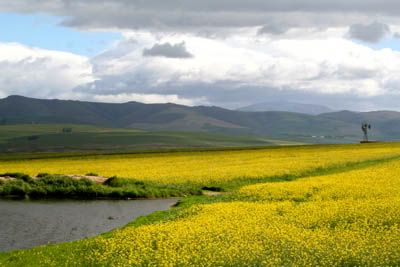 Unfortunately, they couldn’t be. Perhaps our mistake was in leaving the rustic, wholesome flavours of the Karoo? From Barrydale we drove through the Tradouws Pass, a winding canyon road brimming with golden flowering fynbos that took us out into the Overberg. Even someone without any knowledge of South African geography could guess that we had left the Karoo behind; the rugged wilderness of the desert had been replaced with an open sea of manicured fields. Green waves of wheat alternated with golden waves of canola, their placid surface rippled as wind rolled through their stalks. But even though we had left the Karoo, we spotted flocks of fluffy white sheep, a comforting sign that we were still in lamb country.
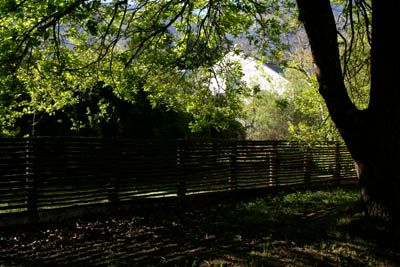 We spent that night in Greyton, a misplaced English hamlet set in a grove of similarly misplaced Bluegum trees. Though its quiet streets follow the same church-centred layout as Montague or Barrydale, the atmosphere in town felt oceans apart. Brilliantly green knee-high grass chokes the empty spaces between houses, a lush contrast to the dorps of the Karoo.
When evening arrived, we discovered that there was only one place in town open for dinner. Greyton is supposed to have some fantastic restaurants; this, unfortunately, was not one of them. We stopped by, checked out the menu, and then circled town hoping something else might still be open. No luck. So we headed back, took a table, and hoped the restaurant would defy our low expectations. We both opted for the lamb, which seemed the safest bet. Our plates were set before us. The potatoes had been reshaped into floury wedges as tasty as paper napkins. The vegetables had been boiled soft, and then in case they still looked too much like something that might have once come from the earth, covered in a gooey cheese sauce. We focused in on the meat. Mid-bite we paused, and looked to each other for confirmation. It was delicious. Beneath the smoky flavour of the grill was soft rare meat full of rich lamb flavour. It was natural and wholesome, the slight hint of wildness tempered by something nurturing and warm. It was a flavour as comforting as being welcomed back home. Or in my case, being welcomed to my new home.
Wednesday, September 09, 2009
eatingCULTURE/eaten: Vetkoek.
Eating the world, one bite at a time.
 Cape Town’s Milnerton Market is not only a fantastic place to look for second hand kitchenware and used books; it’s also a great place to sample some simple South African foods. On our last visit, we went specifically with one food in mind: vetkoek. With a name that literally means fat cake, you shouldn’t be surprised by the bread’s somewhat greasy texture and flavour-- it’s a little like a savoury donut. We had ours filled with ‘mince’ (ground meat), for a rich and nicely greasy snack—a filling antidote to the cold rainy weather.
 Cape Town’s Milnerton Market is not only a fantastic place to look for second hand kitchenware and used books; it’s also a great place to sample some simple South African foods. On our last visit, we went specifically with one food in mind: vetkoek. With a name that literally means fat cake, you shouldn’t be surprised by the bread’s somewhat greasy texture and flavour-- it’s a little like a savoury donut. We had ours filled with ‘mince’ (ground meat), for a rich and nicely greasy snack—a filling antidote to the cold rainy weather.
Wednesday, July 29, 2009
Trou.
 Early on in the planning stages of our nuptials, Bordeaux and I peeked into a wedding magazine together. It was filled with images of white gowns and bridesmaids—and not much that applied to us. So we realized early on that we wouldn’t be doing much as usual with our wedding. In the end, this meant greater freedom—we could have our wedding however we wanted. Our wedding day was relaxed and very casual, centred around celebrating with our family and friends and, of course, enjoying a delicious meal.
 Theme:
Since the announcement of our engagement coincided with our return to South Africa several months ago, we decided to go for a distinctly South African wedding. In particular, we focused in on the style and food of the Karoo, the arid semi-desert that fills much of South Africa’s interior. We had visited the region together on a road trip shortly after we started dating, and in some ways the desolate landscape seemed an attractive counterpoint to the usual frilliness and extravagance of a typical wedding.
 Style:
In keeping with the Karoo theme, we went with something spare, domestic, and slightly retro. A simple sawhorse table was set up for the buffet, and covered with raw hessian. Food was served on wooden cutting boards and a mix of retro plates and platters in creamy shades of blue and pale yellow (we found many of our serving platters among the treasures at the Milnerton Market). We borrowed some vintage chairs from our friends to fill out our under-furnished apartment, and set up a bar on an antique table. Bordeaux’s mother arranged bouquets of indigenous flowers, such as proteas, fynbos, and calla lilies, adding some subtle colours. Bordeaux’s family also very kindly brought down several beautiful aloes with them from their home in Limpopo—they transported them so carefully that two of the aloes still had their tall flowering stems in tact.
 Food:
Food:The one thing Bordeaux and I obviously had to have at our wedding was incredible food. To fit with our Karoo theme, we served a boerekos feast of traditional Afrikaner dishes. We had a great time doing the sourcing for the wedding. Since we were doing the wedding so small, we didn’t have to bother with caterers, and could instead really just have the foods we love and enjoyed. We were also able to source each menu item and ingredient individually, which ensured that we were shopping locally, and working with small-scale producers. The highlight of our meal was a delicious Karoo lamb (which we actually picked up several days earlier from a butcher in the small Karoo town of Prince Albert), roasted with rosemary and garlic. On the side was a butternut salad with goat’s milk feta (one served with roasted cherry tomatoes for the vegetarians, and one with biltong- a dried South African meat- for the carnivores). In addition, we had a massive spread of artisinal breads and locally made cheeses. There were accompanied by jars and jars of interesting preserves that we gathered from different farm stalls, like green figs in syrup, gooseberry and granadilla jam, and apricot and walnut chutney. And all of this was of course served with many bottles of South African wine. Just before our guests arrived, I looked over the spread we’d set out on the table, and joked to Bordeaux that he had probably never expected to serve boerewors and biltong at his wedding. But somehow, it felt perfect—delicious, relaxed, and unfussy, the kind of food people went back for thirds of.
 Cake:
Cake:Since there were not going to be any big white gowns at our wedding, a big white cake would have felt just as out of place. In its place, we offered some local desserts. We had an array of milk-tarts (creamy pies sprinkled with cinnamon), and koesisters,
(syrupy and spicy Cape Malay coconut donuts). The milk-tarts were made by a friendly trader at the Neighbourgood’s Market (she sweetly surprised us by making the smaller tarts in the shape of hearts), and the koesisters came from a woman who bakes them in her home in the Bo Kaap (an historic Muslim neighbourhood of Cape Town).
The day worked out perfectly—we even had brilliant summer weather, despite it being the middle of winter—and we were able to totally relax. The South African theme worked well since we were able to really take advantage of the best foods the country has to offer, but it was also a tribute to my adopted country. After all, the right for Bordeaux and me to get married is one we don’t yet have in my country, but one that thankfully we do have here.
Monday, March 23, 2009
Bo Kaap take-away.
 The more one looks around Cape Town, the more striking it is that there’s good food available everywhere. Leaving the train station, an inconspicuous shop selling air-time and hair-gel, with a counter that serves richly spiced curries. Late night, a stand sitting outside of a club, sizzling with the smell of cooking boerewors. A tiny bakery tucked between two larger stores, quietly selling koesisters coated in flakes of coconut. Most often, we glimpse these sightings at the wrong time—we’re not hungry yet, we’ve just finished dinner, or simply aren’t in the mood for a little take-away. Thankfully on Thursday, our sighting came at the perfect time—just as we starting to decide where we should grab lunch.
We were walking through the Bo Kaap, an historic Muslim neighborhood, when we spotted a small crowd gathered around a busy street-corner grill. Stepping through the curtain of charcoal smoke, we looked in at what he was selling: grilled sausages, steak, and chicken. We grabbed a to-go meal of wors and chicken, and took it home. The wors—what can I say about it really?—was fine, a pretty standard grilled sausage. The chicken, however, was fantastic. Its skin was crisp from the heat, and stained a golden red from the marinade of spices. But best of all was the chili sauce that garnished it—not the syrupy sweet ‘chili sauce’ that is so popularly poured out of a bottle here in South Africa, but a bright green sauce that tasted smoky and spicy.
Tuesday, March 17, 2009
A neighborhood tart.
 As much as I enjoy traveling, I also enjoy being settled—in part, because the idea of ‘neighborhood’ is so important to me. I love developing a few favorite local spots, recognizing other people who live and work near by, and getting in synch with an area’s unique character. And keeping check on the flow of people in the neighborhood can bring unanticipated benefits, as well. Bordeaux and I have a general rule that if we see large crowds gathering in unexpected places around our neighborhood, we investigate. This could conceivably be a faulted plan, should we stumble into a high-tension political rally, or some sort of riot, for example. But our experience has more often proved that where we see parked cars and gathering families, there’s often something good to eat.
Thankfully, these instincts proved correct on Saturday. Though the parking spaces across the street from us are generally empty on weekend mornings, on this particular morning the sidewalk was lined with cars, with more pedestrians ambling over from spaces found further away. We postponed our trip to the supermarket, and followed them into the leafy pedestrian avenues of the public gardens.
Immediately, a group of boys surrounded us, brandishing Styrofoam takeout boxes.
“Hey, buy from me!”--“Eight Rand! Eight!”--“Fine, O.K., two for ten Rand!”
“I don’t even know what you’re selling…”
But by that point, they’d moved on to other potential clients. Continuing in, we discovered a teeming high school fair. Kids and parents were crowded around folding tables, competing for customers. We found tables crowded with curried mince wrapped in roti, boerewors on the grill, and slap chips drowned in vinegar. Desserts were even better represented, with heaps of traditional South African treats like milk tart, malva pudding and pineapple cheesecake, and some non-traditional treats, like marshmallows speared on bamboo skewers. But these could hardly distract me, as I quickly found a table selling my favorite South African dessert—peppermint crisp fridge tart.
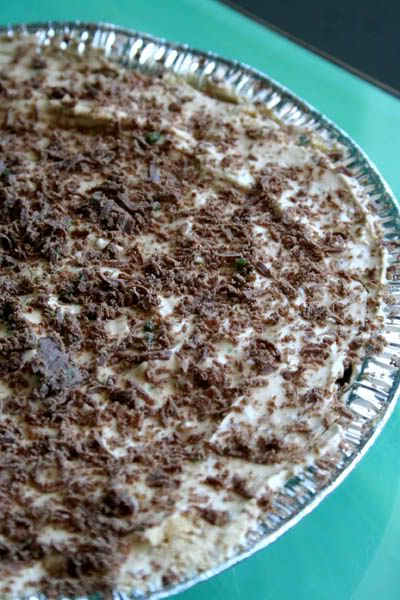 I’m guessing that some people may be unlucky enough never to have encountered such a thing, so let describe it for you. A peppermint crisp fridge tart is not a delicate dessert, not a carefully crafted confection. Any aspirations the word ‘tart’ may have at evoking qualities of refinement are made impossible by the awkward and overbearing bulkiness of the word ‘fridge’ preceding it. But this is exactly why it’s so delicious. There are no pretensions here—just an incredibly rich, decadent, homemade dessert consisting mostly of very simple ingredients. The base of course is a healthy supply of ‘Peppermint Crisp’, a brand of flaky chocolate bars filled with a green honeycomb of biting minty flavor. These are crushed, mixed with a sweet milk sludge, and leveled into a crust of ground biscuits. It is then left on its own to chill in the fridge, as if even the act of baking would be too extravagant for this dessert. The result is spectacular.
The easiest way to conjure its taste is by evoking—though I know this benefits only my American audience—Girl Scout cookies. While some may favor those odd coconut rings or the shortbread children (and maybe one or two people like the hard little oatmeal-raisin discs), the best of the cookies is obviously the Thin Mint. The melty chocolate coating, the biscuit crunch, the fresh peppermint flavor—this may be the only reason Girl Scouts continue to exist. Eating a slice of peppermint crisp fridge tart is like taking a box of Thin Mints, churning it with vanilla ice cream and graham crackers in a blender, and then eating the end result with a spoon. Only better.
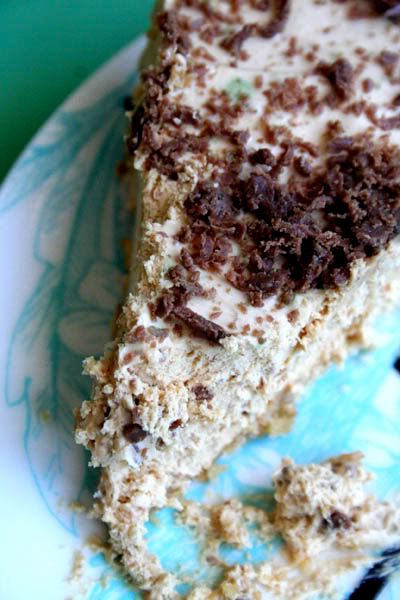 The entire pie was purchased on Saturday, and as of this writing there is a slim slice left in the fridge. We had a little help, but the two of us did most of the consumption. Which brings me to a realization. While being involved in your neighborhood can certainly have some major benefits, it doesn’t always benefit your health.
Friday, February 27, 2009
This is not a story about wors.
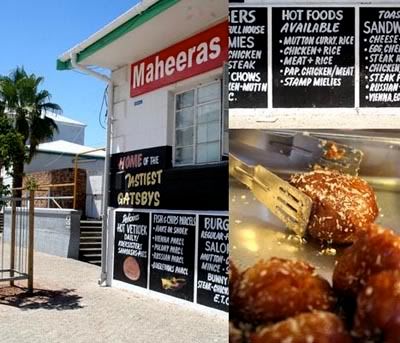 Though it sort of starts out that way. Hungry for lunch and nothing on our schedule, Bordeaux and I hopped on a train to Claremont, following a tip from the Rough Guide that advised that women often set up grills to sell boerewors around the station. Of course when we got there, there were no ladies, no grills, and no boerewors for sale. Thankfully, we found Maheera's.
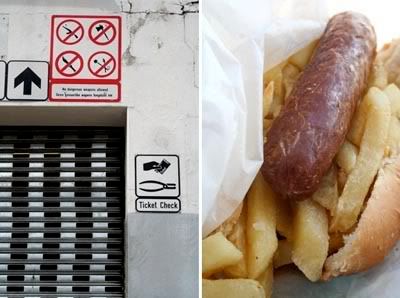 Maheera's is the kind of shop that sprouts up near railway stations, selling cold cream soda, tubes of chapstick, and airtime vouchers. And in Cape Town, they're one of the best places to sample local fast food, which is an offbeat mix of British, Afrikaner, and Malay flavors. We ordered two wors rolls with chips, a small dessert to share, and took them back to the train station, where we ate them on the steps. The roll was not accompanied with chips, as I had assumed, but filled with them-- even better. And the whole thing was doused with a tasty soaking of vinegar, and a drizzle of salt.
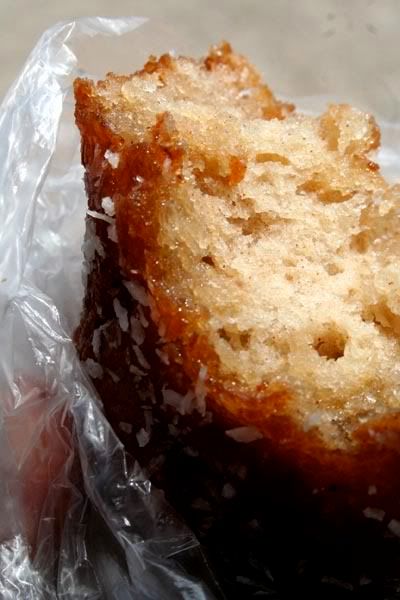 But the unexpected star of the meal, the focus of this entry, was the dessert. A golden ball of fried dough called a koesister. The Malay cousin of the Afrikaaner koeksister, it's smaller, rounder, less syrupy, and infinitely more flavorful. The glazed exterior is flaked with coconut, and gives way to a doughy interior studded with spices, sharp with cinnamon and clove. Had we not already eaten the wors and chips, we easily could have returned inside to buy a few more-- as it is, the koesister provides more than ample reason to make a return trip to Claremont.
Friday, February 20, 2009
eatingCULTURE/tastes: Eat your liver.
Opinions in eating.
 Are there any foods you don't eat? Bordeaux and I have been cooking for other people quite often lately, so we've been finding out a lot about what different people won't eat: no egg, no basil, no cilantro, no tofu, no chili. In comparison, I tend to think of myself as really eating almost everything-- though every now and then, I do run up against something that I'm not exactly eager to try. Like liver.
Had I ever eaten liver before? I doubt it-- but somehow I got it into my head that I wouldn't like it, perhaps from some mass pop-culture aversion to the stuff. But my mission this year is to learn all about boerekos, and it's impossible to do that without at least eating a little liver. And really, I admire the eating of liver-- if you're going to eat an animal, it's more responsible to eat the whole animal.
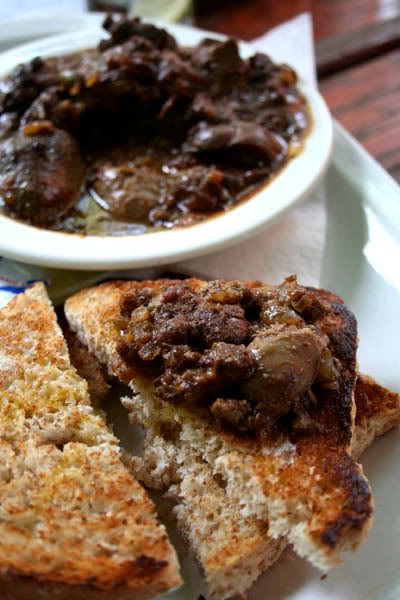
So at an outdoor cafe in Pretoria, I ordered a simple meal of chicken livers on toast. The dark grey livers arrived in a small bowl, bathed in peri peri, a South African hot pepper sauce. I spread it on the toast, and gave it a try. I have to admit, my first taste was a little off-putting. The slightly metallic tang, the stodgy texture. But it grew on me-- despite its downsides, it has some rather redeeming qualities. It certainly has far more flavor than most meat, possesses a richer taste and complexity, and took on the spice of the peri peri well. I could certainly see ordering it again-- with less hesitation next time.
 Are there any foods you don't eat? Bordeaux and I have been cooking for other people quite often lately, so we've been finding out a lot about what different people won't eat: no egg, no basil, no cilantro, no tofu, no chili. In comparison, I tend to think of myself as really eating almost everything-- though every now and then, I do run up against something that I'm not exactly eager to try. Like liver.
Had I ever eaten liver before? I doubt it-- but somehow I got it into my head that I wouldn't like it, perhaps from some mass pop-culture aversion to the stuff. But my mission this year is to learn all about boerekos, and it's impossible to do that without at least eating a little liver. And really, I admire the eating of liver-- if you're going to eat an animal, it's more responsible to eat the whole animal.
So at an outdoor cafe in Pretoria, I ordered a simple meal of chicken livers on toast. The dark grey livers arrived in a small bowl, bathed in peri peri, a South African hot pepper sauce. I spread it on the toast, and gave it a try. I have to admit, my first taste was a little off-putting. The slightly metallic tang, the stodgy texture. But it grew on me-- despite its downsides, it has some rather redeeming qualities. It certainly has far more flavor than most meat, possesses a richer taste and complexity, and took on the spice of the peri peri well. I could certainly see ordering it again-- with less hesitation next time.
Tuesday, February 17, 2009
eatingCULTURE/eaten: Padkos.
Eating the world, one bite at a time.
 Less than a week after arriving in South Africa, we headed into Kruger National Park. Though I've been in the park before, this was my first time doing it South African family style. Instead of staying at a lodge, we rented out restcamp cabins, and catered our own meals-- starting with a stop for some padkos on the way in.
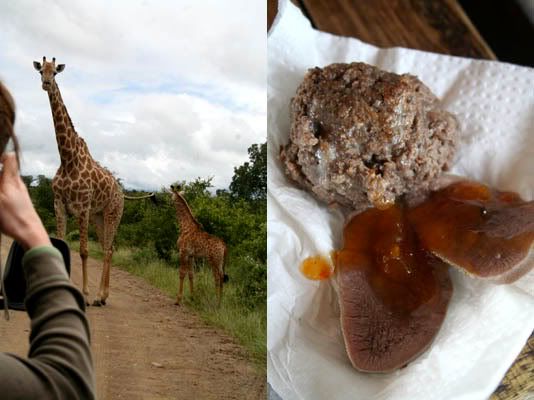
Though the Afrikaans term padkos could be translated as 'road food', it bears no resemblance to the street-side noodles and sidewalk satays I enjoyed in Asia. Instead, it's food for the road, packed ahead and meant to be eaten on a trip. For our first stop, we had two dishes: frikadelle and sliced beef tongue. Though a little heavy for a morning snack, the frikadelle was easily likable, as it was well spiced with cinnamon, nutmeg and coriander. And though I hesitated a little before biting into the tongue, it was surprisingly tasty as well. It paired particularly well with a tangy peppadew chutney, giving it the distinctly South African combination of savoury and sweet.
 Less than a week after arriving in South Africa, we headed into Kruger National Park. Though I've been in the park before, this was my first time doing it South African family style. Instead of staying at a lodge, we rented out restcamp cabins, and catered our own meals-- starting with a stop for some padkos on the way in.
Though the Afrikaans term padkos could be translated as 'road food', it bears no resemblance to the street-side noodles and sidewalk satays I enjoyed in Asia. Instead, it's food for the road, packed ahead and meant to be eaten on a trip. For our first stop, we had two dishes: frikadelle and sliced beef tongue. Though a little heavy for a morning snack, the frikadelle was easily likable, as it was well spiced with cinnamon, nutmeg and coriander. And though I hesitated a little before biting into the tongue, it was surprisingly tasty as well. It paired particularly well with a tangy peppadew chutney, giving it the distinctly South African combination of savoury and sweet.
Monday, February 16, 2009
Boerekos.
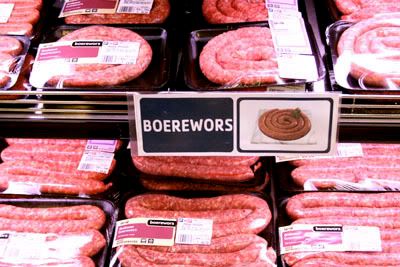 Though I’ve approached South Africa from overseas four times now, this was the first time in which I didn’t arrive in Cape Town. Instead, I was welcomed back to South Africa by the city of Pretoria.
Having Pretoria serve as my entryway back into South Africa was an odd experience. Unlike Cape Town and Johannesburg, which are distinctly world cities, Pretoria has an oddly insular atmosphere-- despite being home to a range of foreign embassies and consulates. Beyond that, it has a traditional vibe, with distinctly Afrikaner overtones. You can see it in the city’s landmarks and architecture: the orange brick apartments, the towering Voortrekker monument. You can see it in the style: men wear their shorts a few centimeters higher above the knee, blond children walk into grocery stores completely barefoot, and women favor a red henna tint in their hair (I refer to it as a Pretoria rinse). And to some degree, you can see it in the food, where hints of boerekos work in among the dishes on refined café menus.
In the past, South African food had a reputation for being heavy, bland, and uninteresting. Thankfully, opinion has changed in recent years, with more people paying attention to the country’s diversity of culinary influences, unusual local ingredients, and traditions of homecooking. I have to admit that over my last period of residence in the country, I didn’t pay much attention to the food. So this time, I’ll be making that one of my focuses. In particular, I’ll be focusing in on boerekos, ‘farmer’s food’: traditional South African cooking, a mix of Afrikaans, English, African, and Malay traditions. In many ways, the above boerewors is a classic example: farm style sausages made with dry Malay spices. While it may not be as photogenic as the Thai curries and Cambodian salads I’ve previously featured on this blog, let’s hope it’s just as tasty.
Subscribe to:
Posts (Atom)