Showing posts with label Adventure. Show all posts

Tuesday, March 11, 2008

Cold weather flavors.

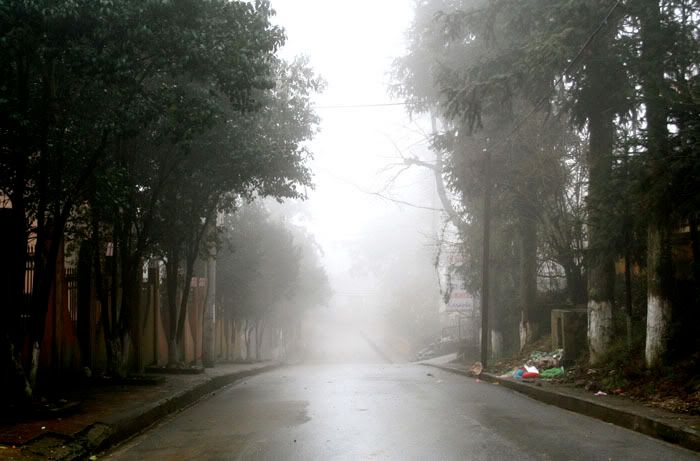
Our train pulled into Lao Cai in the late mornings of night, before the sun rose above the mountains. With luggage on our backs and a biting cold mist hanging around our shoulders, we climbed across platforms and stepped over train tracks, ignoring the inviting calls of touts. A minibus took us on the next leg of our journey. As we curved along mountain passes, we watched the morning light settle among quiet towns and groves of dark bamboo. We arrived at our destination under heavy cloak of fog. As they climbed out of the minivan, the other passengers bundled up against the bracing weather, but I breathed the sharp air in.
Most people visit Sapa for the hill tribe trekking; Bordeaux and I visited visited for the cold.

Living in steamy tropical Bangkok, few things seems as exotic as cold weather. So when we laid out our plans for visiting Northern Vietnam, we made sure to include this tiny hill station near the border of China. While I had known that the weather would be drastically different, I hadn't realized how profoundly that difference would resonate in the food.

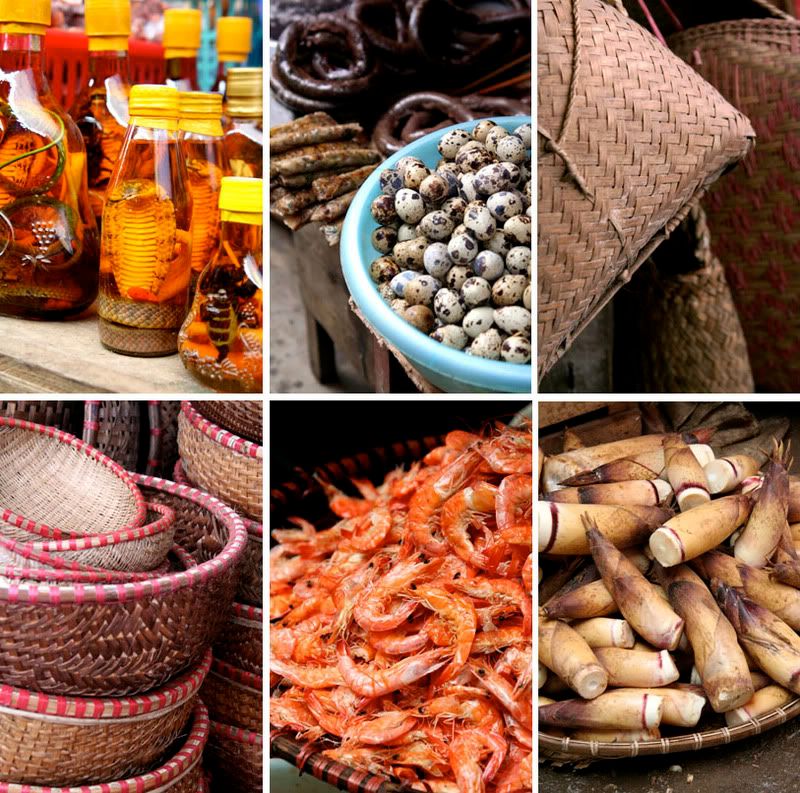
Likely the most interesting sight in town is the busy market, which serves people from all over the region. All around the market, vendors sold different snacks. There were piles of vegetables, stacks of bamboo baskets, and bowls of delicately painted quail eggs. As we explored, Bordeaux and I were pursued by Hmong women, who sold beautiful patterned blankets in deep blues and electric greens. We were also called out to by seated vendors, who sold strange snacks from cover of umbrella.

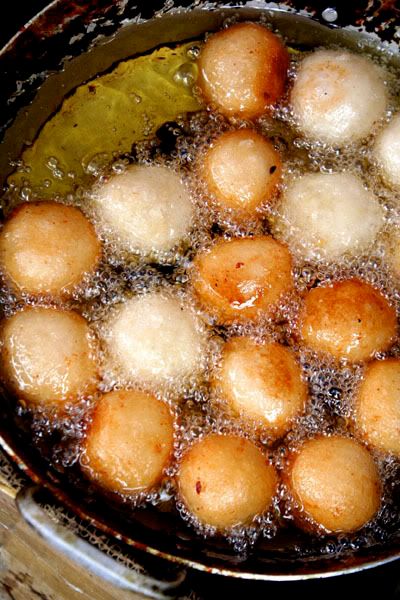
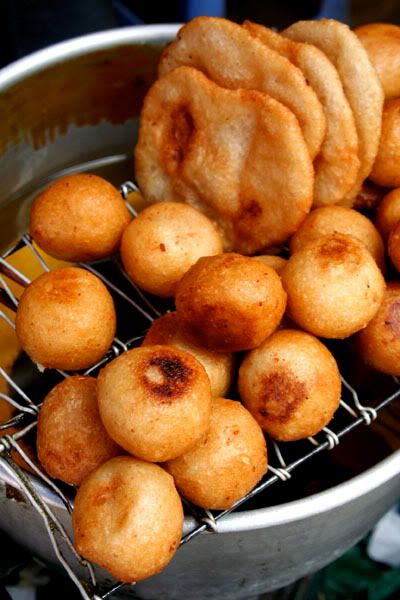
These first treat I tried was the above, which tempted me with its singed golden skin. Though they looked like round doughnuts, these were actually deep fried balls of sticky rice. The coating was tasty and crisp, with a soft rice interior that concealed a filling of pounded yellow mung beans.

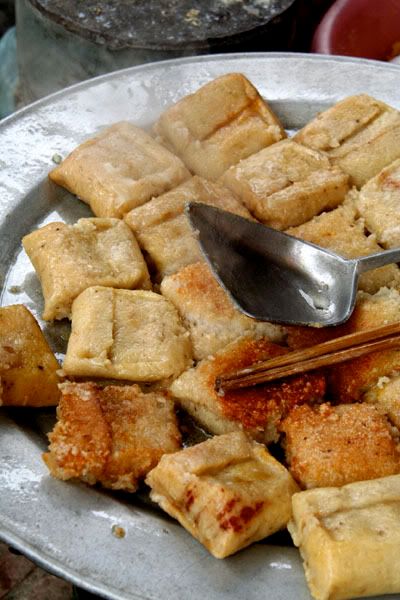
Rather similar was this sticky rice treat. Rice was steamed into blocks in banana leaves, then grilled lightly in a large pan. The rice was soft, with a subtle flavor from the leaf.

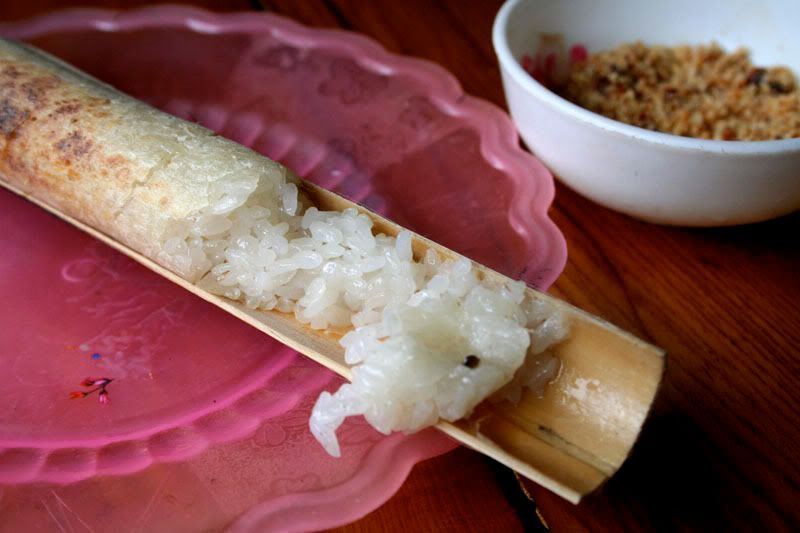
At a market restaurant, we ate a simple lunch of hot soup. Far more interesting than our meal, however, was the accompaniment: sticky rice grilled in a bamboo shell. It was served with a dish of crushed, salted peanuts. Dipped into the salty coating, it was like a Sapa candy bar.

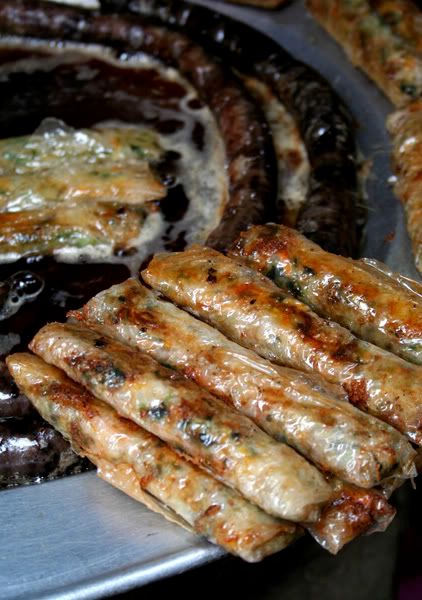
Not all of the dishes looked equally tempting. At first, I mistook this snack as a greasy sausage. It was actually an interesting take on a spring roll: a crunchy filling wrapped in silk-thin rice paper, and fried among a coiled sausage for added flavoring. It was hot and crispy, with a tasty filling of fresh vegetables. It was the most flavorful snack we ate- which really isn't saying much. The food in Sapa was tasty, but it was profoundly simple, and mostly very subtly flavored. It's a cuisine that makes sense, given the climate. Here in these cold mountains, among the starchy mild flavors of a long winter, we felt continents away from our spicy tropical home. Which, I suppose, was the point of the journey.

For a different account of our activities, be sure to check out Bordeaux's entry on Sapa at his blog, Maritasays.

Thursday, November 22, 2007

Thanksgiving among Bedouins.

This year marks the third Thanksgiving that I have spent out of the Unites States. Last year I was in South Africa, and I barely noted the date as it passed by. The year previous, I was in Syria, halfway through a trip around the Middle East, and had a very memorable Thanksgiving in a desert oasis. I spent the evening having coffee with a small group of Bedouins, an all-white camel named Zenobia, and a mysterious German woman whose real name I never learned.

The day before, I had taken a minibus tour provided by my Hamas hotel out to see the Roman ruins of Afamia, and the crusader castle the Crac des Chevaliers. In the minibus with me there were several other guests from my hotel: two Danish men who were traveling together, an older Belgian man who was traveling alone, and a young German woman who introduced herself as Carmen.

"What do you do in Germany?" the Belgian man asked Carmen.

"I design blindfolds," she answered simply.

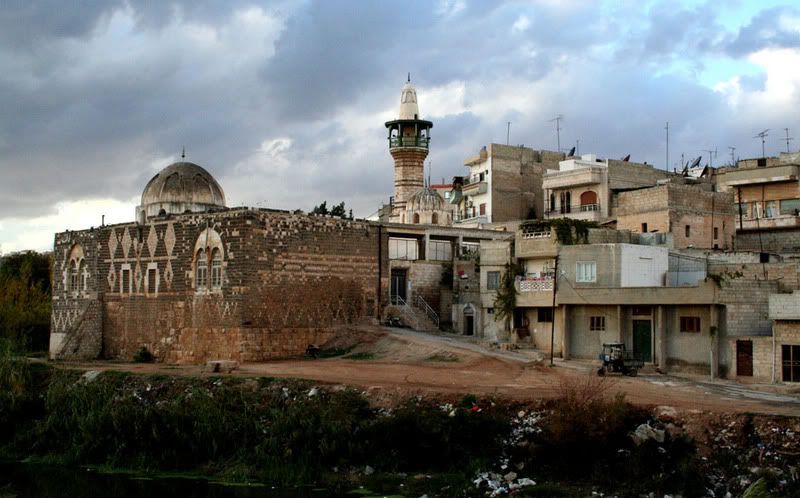
The ruins of Afamia were simple, but beautiful- as the early morning light filtered through the crowd cover, the columns stood strong in silhouette. We visited several small castles on the way to Crac des Chevaliers. Some looked tiny, their staunch bodies tightly fortified. Others had been used in the building of new towns, the old castle walls now providing sturdy foundations for modern housing.

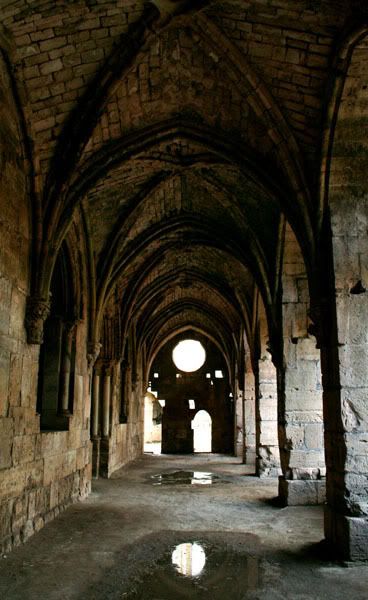
Crac des Chevaliers itself was astounding, a massive complex of outer walls, inner sanctums, and a mix of Gothic and Romanesque details. Amazingly, we were the only people there; a small group of tourists in a vast and abandoned tourist site.

On the minibus ride back to Hamas, we discussed our onward travel plans. Carmen, the Danes and I were all planning on heading to Palmyra. The Belgian had already been.

"Palmyra is overrated," he stated dismissively.

"Oh, you would probably say that the pyramids are overrated," Carmen sighed.

"Yes- the pyramids are overrated," he responded.

Carmen leaned forward to my seat, and asked me how I was getting to Palmyra. "Perhaps we should travel together," she suggested.

Back at the hotel, we disbanded, Carmen and I setting up loose plans to meet in the morning. After dinner I returned to my hotel room; I switched on the tv, and found a channel showing English language programming. I settled in for an incongruous evening, watching Kindergarten Cop and revisiting the sights of the day in my head.

I woke up on Thanksgiving morning to find that Carmen had already departed, leaving me a note at reception. "I woke up early," it read, "but saw that the lights in your room were off, so I have gone ahead. Carmen."

I caught a taxi to the bus station, and caught a minibus to the transport hub of Homs. There, I caught a cab to from one bus station to another, and located the bus heading toward Palmyra. The inside of the bus was heavily decorated, with elaborate drapes, plastic fruit, and small painted cherubs. Two young boys sat at the drivers side; while we waited for bus to fill up, they asked me where I was from, and imitated the sound of bomber jets upon hearing my response.

Leaving Homs, the landscape abruptly transitioned from scrubby forest into harsh desert, the pines and craggy rocks thinning out as the horizon became a razor-edge of burning red sand.

Upon arriving in Palmyra, I located a cheap hotel at the edge of the ruins. After a short rest on one of the twin beds, I headed out to look around. As I walked through the lobby, the clerk stopped me, and handed me a slip of paper. Confused, I unfolded it.

"Ah, so we are staying at the same hotel! If you wish to have coffee in a Bedouin tent, meet me at 9 o' clock in front of the Hotel Zenobia. Carmen."

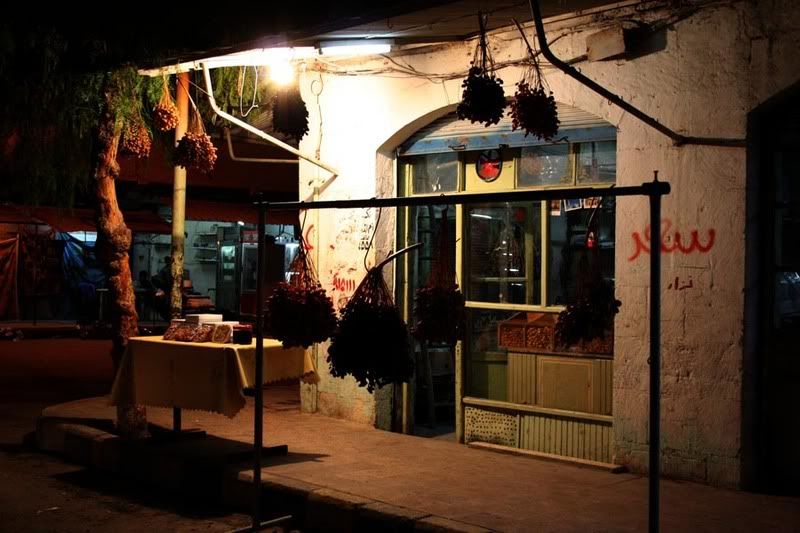
Palmyra, as it is called in English, is so named because it was founded at an oasis of Date Palms- also giving it its Arabic name, Tadmor, meaning place of dates. It was once the center of a vast trading network that stretched from China to Rome, and a cosmopolitan meeting place for disparate cultures.

Traveling in Syria gives one the sense of physically seeing the past, one layer piled upon another layer. Atop a distant hill sat a medieval castle, which looked down over the desert ruins below. The fragments of ancient Palmyra itself looked an odd cross of Egyptian and Roman- Western forms redone in a pale sandstone.

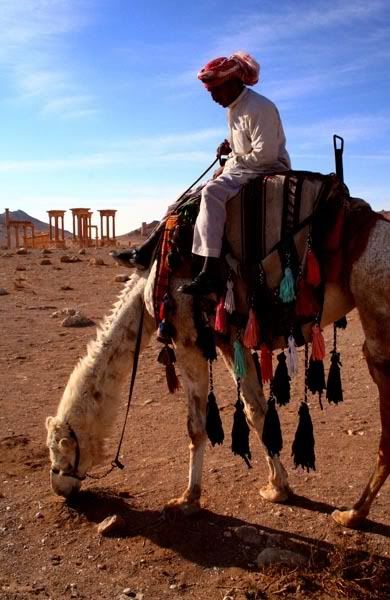
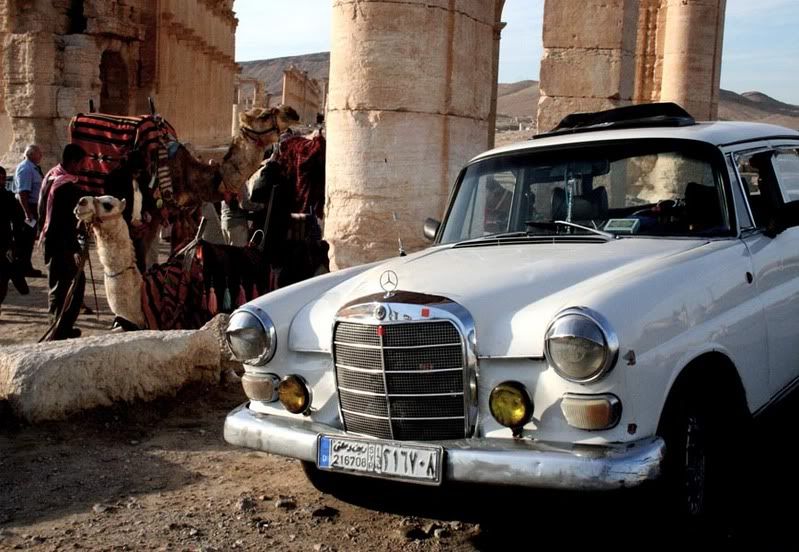
In the distance I saw two men talking; one was on foot, and the other sat astride a pure white camel. He approached me, and waved an arm to signal me hello. He introduced himself: he was Mahmoud, a Bedouin. He gave me his card, with his photo, cellphone, and fax. He offered his tours, and a homestay at his camp. I took the card, and told him that I would consider it for tomorrow, that I wasn't sure if I would stay in Palmyra for a second day.

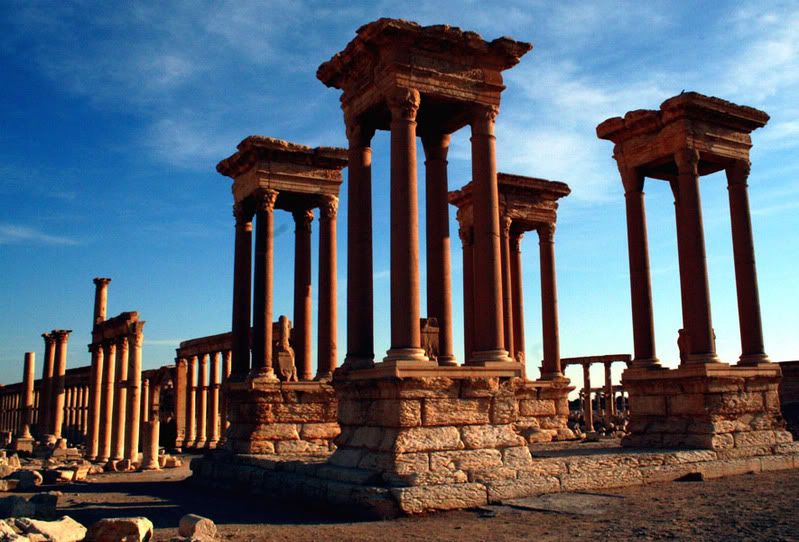
I felt obliged to stay among the ruins until sunset, so I found an isolated spot and fixed my gaze on a distant pair of tombs. Nestled at the base of a hill, the two towers both had an unusual sloping form that made them look even more unreal than their setting already did.

Heading back into town, I looked around the main tourist drag for dinner, but found only empty dives decorated in Bedouin kitsch. Scanning them, I wondered which Bedouin tent Carmen wanted us to have coffee in. Each tourist diner had one, hoping to lure in visitors with their exotic florescent charm. Finding little that appealed to me, I bought a bag of dates, and headed back to my hotel room.

A few minutes before 9, I left my room and walked out to the Hotel Zenobia. It was so dark that all I could see was the faint silhouette of the ruins against the distant mountains.

I was wondering whether I should look inside the hotel when I saw her approaching, her bulbous down jacket looking so uneven on her thin legs.

Upon arriving, she explained to me that she had met a Bedouin man who had invited her for coffee, and she hadn't wanted to go alone.

"How did you know that I was staying in the same hotel as you?" I asked her as we waited.

She smiled coyly. "Haven't you ever heard of a woman's intuition?" She paused, and scanned the starry sky. "I saw your passport behind the front desk."

A motorbike puttered up the road, and into the drive. A handsome man with dark eyes stepped off the back, and the driver u-turned and headed back the way he came.

As he came nearer, I realized that it was Mahmoud- the man who had given me his card that afternoon. "Ah, Susan," the man said. She shot a look at me. "I'm glad you came."

We followed him through the darkened ruins back to his camp. Fragments of temples and shards of broken columns appeared out of the blackness, taking form as we grew near, and disappearing again as we walked further.

At his camp, we found three other men waiting for around a fire. Before taking us to join them, Mahmoud introduced us to his camels. He proudly introduced us to Zenobia, the white camel that I had seen him on earlier.

"She is a very special camel," Mahmoud told us. "My favorite. Very special to me."

"Because she's so beautiful?" I asked.

"Because she is so smart," he said, patting her on the neck.

The other men had prepared coffee for our arrival, and poured us each a cup as they warmly invited us to sit. The night air was already crisp, and the hot cup warmed my hands quickly. The coffee was thick, coarse and delicious, richly spiced with cardamom. From a distance, Zenobia and the other camels watched over our conversation.

"What do you do in Germany, Susan?" Mahmoud asked Carmen.

"I test drive speed boats," she answered simply.

Mahmoud impressed us with his language skills, offering phrases in German, Italian, Spanish, and French. He explained that while he had settled at Palmyra in order to make money off of the tourist trade, his parents were true Bedouins, who lived as nomads in the desert.

The evening grew late as we talked, and Carmen eventually indicated that we should head back to the hotel. We talked little as crossed the ruins again. She asked me my age, and raised her eyebrows exaggeratedly when I told her. "I could never have done what you're doing when I was your age," she said. She said that she was planning on staying in Palmyra another day. She wanted to see some of the further ruins, and perhaps to spend a night out in Mahmoud's camp. "Perhaps I'll see you around tomorrow," she said as we parted in the hotel hallway.

The next morning, I woke early and caught a bus heading toward Lebanon, leaving no notes behind.

Monday, November 05, 2007

The Train to Old Siam.

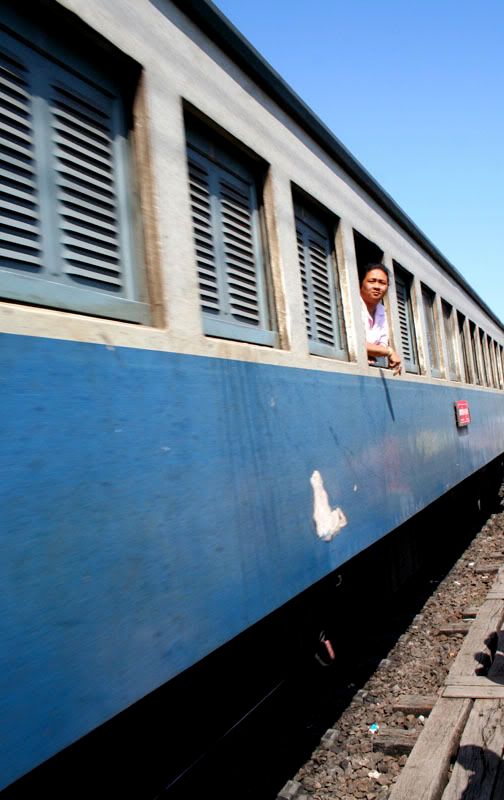
Ayutthaya is one of the most popular sights in Thailand, and with reason. It's close to Bangkok, so it's an easy daytrip or weekend getaway; there are beautiful ruins, evocative of Thailand's regal past; and the pleasant riverside atmosphere offers a soothing retreat. But the train ride from Bangkok to Ayutthaya is itself reason enough to make the journey. The view from the carriage windows offer beautiful subtropical landscapes, and a fleeting glimpse of how most of Thailand lives.

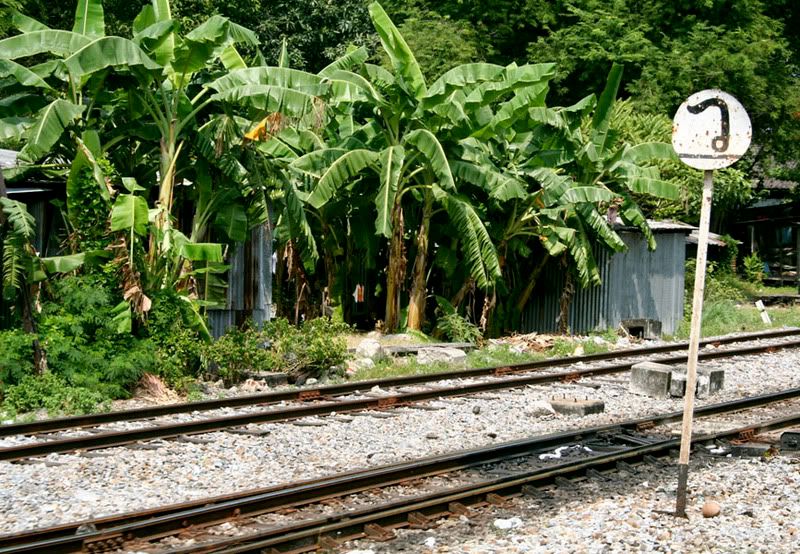
Bordeaux and I caught the train for Ayutthaya on Friday afternoon. From Hualamphong station, the old train slowly chugs and stutters out into Bangkok. The view from the railway presents a very different side of the capital than one usually sees. Spray-painted apartment walls are interspersed with humble houses of painted wood and rusted sheet metal, landscaped with laundry-lines and groves of banana palms.

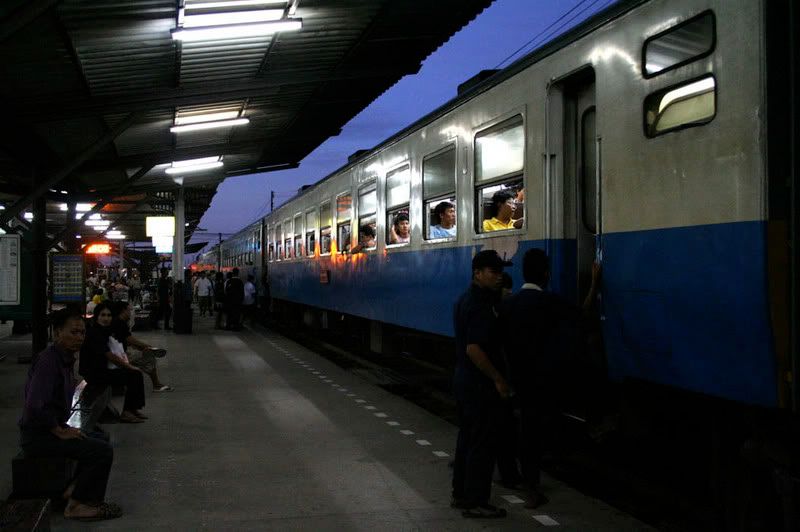
Eventually the city trickles out into rambling suburbs and rice paddy towns. Most of the passengers in the train sat quietly, some napping, waiting for the train to bring them home after the long work week. I had brought a book for the trip, but found myself staring out the window instead. Wooden bungalows sat comfortably on bamboo stilts; lone spirit houses stood among flodded fields. The strangeness of the landscape was revealed in the different shapes and colors of the exotic birds that skim the waterways along the tracks: slim storks and awkward spoonbills hunted among sunken gardens, and crows crowded like black drapes on bare trees. We arrived in Ayutthaya just as darkness settled on the station, and the florescent lights clicked on.

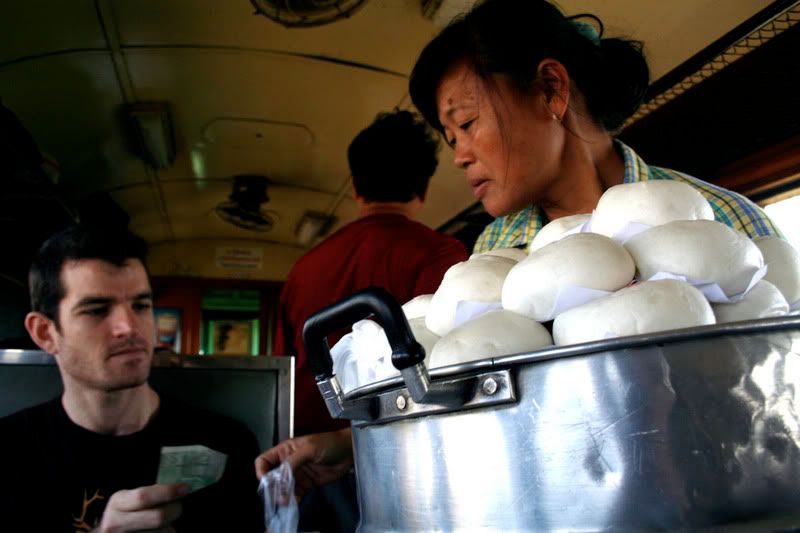
The return trip to Bangkok on Sunday was markedly more lively, crowded with families and young couples returning to Bangkok after the weekend away. The aisles were regularly patrolled by merchants, offering iced sodas from plastic coolers, and fried chicken skewers from bamboo baskets. Bordeaux and I stopped a woman with a metal steamer, and bought two delicious steamed buns filled with a sour shredded vegetable.

Thursday, October 18, 2007

Autumn in the African Alps.

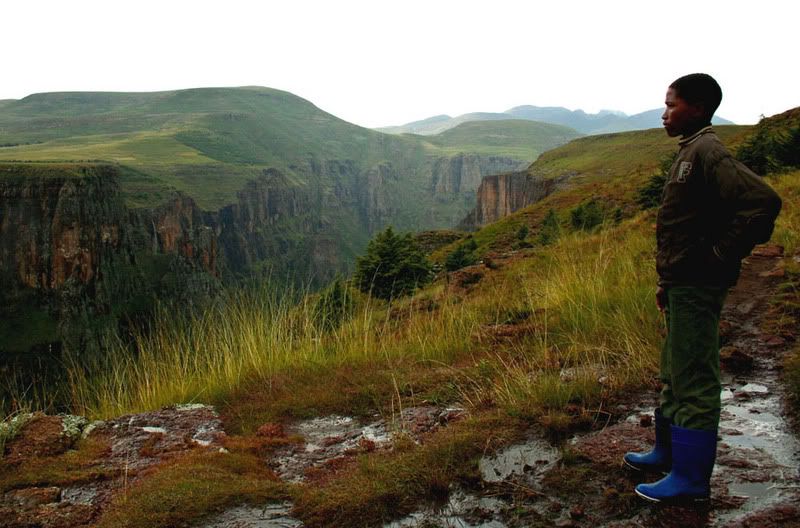
In the year and a half we've been dating, Bordeaux and I have lived on three continents, and traveled in almost ten countries together. This is a pattern we set very early in our relationship. In April of 2006, after knowing each other for less than a month, Bordeaux and I took our first international vacation together. Our school's autumn holidays overlapped, so we decided to take a road trip. We left Cape Town, crossed the winelands into the Karoo, spent an unsettling night in the Free State, and finally entered the ZA-locked country of Lesotho. Known in travel guides alternately as the Mountain Kingdom or the Switzerland of Africa, Lesotho is a ruggedly inspiring country of staggering summits and vast desolate spaces.

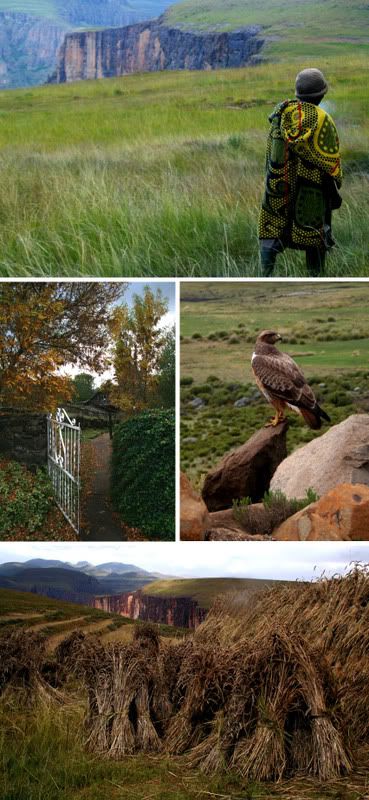
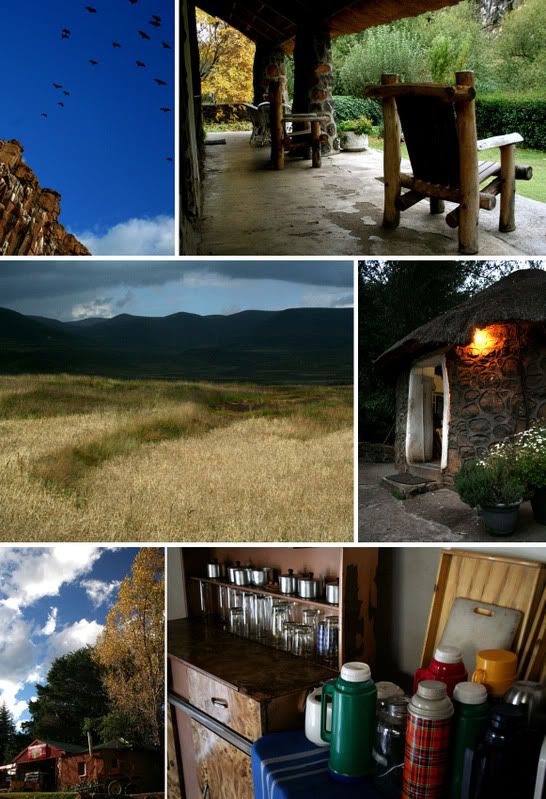
After spending a night at Thabo-Bosiu, near the capital, we departed for the lodge at Semonkong village. We drove for hours along a winding, pot-holed road, passing neither towns nor other drivers as we made our way higher and higher among the barren peaks. We continually questioned whether or not we were lost, and we wondered what would happen to us were the car to break down. We finally reached a high mountain pass (elevation: 2,600 meters), where a tiny hand-painted sign announced that we were approaching the tiny town of Semonkong. Despite being so isolated, Semonkong is actually a tourist destination, offering pony trekking and a tall-but-unspectacular waterfall. The town itself is pleasant: quiet, with an abandoned airport, simple houses, and miles of surrounding farmland. The lodge at Semonkong is set at a nicely wooded curve in the river, tucked between craggy red cliffs and towering trees. The highlight of our visit for me was the early peek at the African autumn. Though summer was still lingering in Cape Town, the season had already changed in Lesotho. The trees around the river were clad in gold, and a soggy carpet of fallen leaves was already settling on the ground. Bright, sunny mornings turned gray with afternoon rains, eventually darkening into damp, chilling nights.

Despite being beautiful, the lifestyle at Semonkong was a little rough, and the comforts few. We spent our days hiking, alternately admiring the rolling hills as we slogged through muddy fields, and seeking shelter from the rain. We'd return to the lodge for lazy afternoons; we had packed a coffee plunger, so we enjoyed long-life milk lattes as we read in the camp kitchen. After dark, we ate in the lodge's bar, sipping near-tasteless Maluti beer alongside the simple vegetarian dinners, which were made with Soya mince. The nights were freezing, and we struggled to stay warm in our tent. Considering how little we knew each other, the trip could have been a disaster. Thankfully, it only made us want more.

Friday, August 03, 2007

Mysterious Angkor.

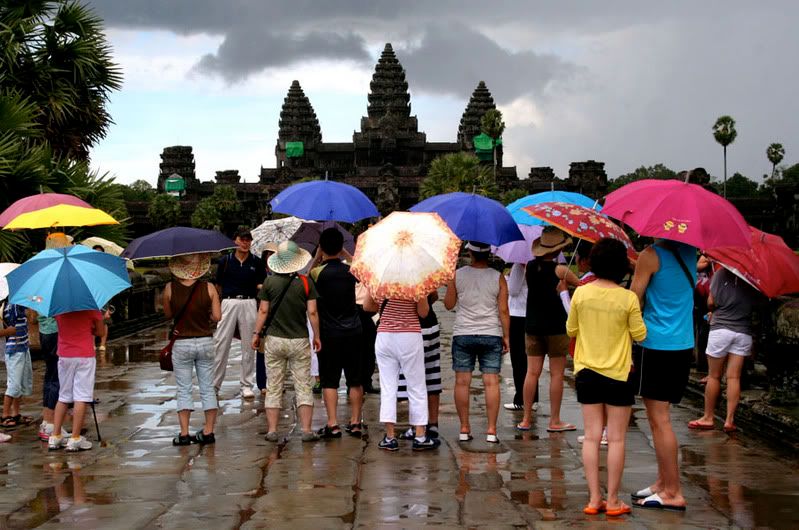
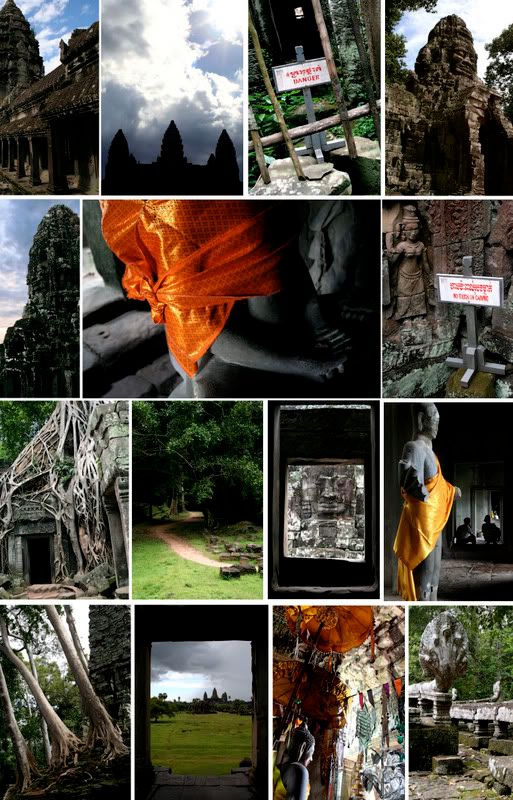
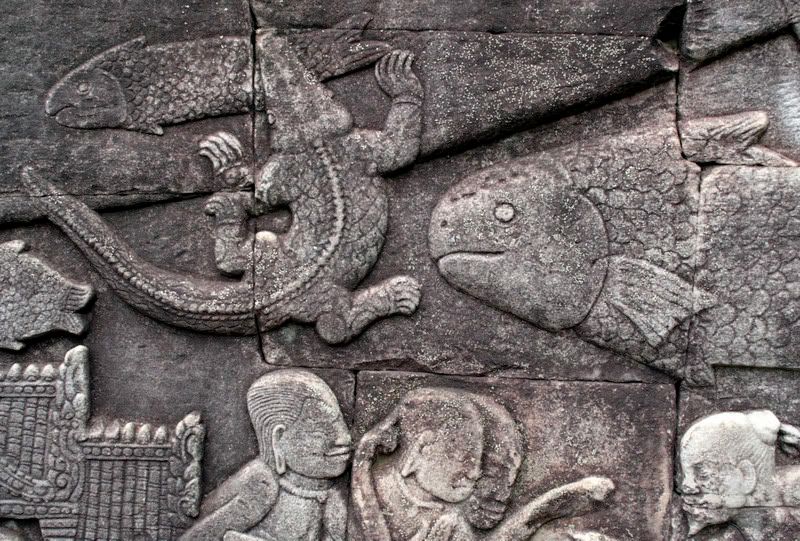
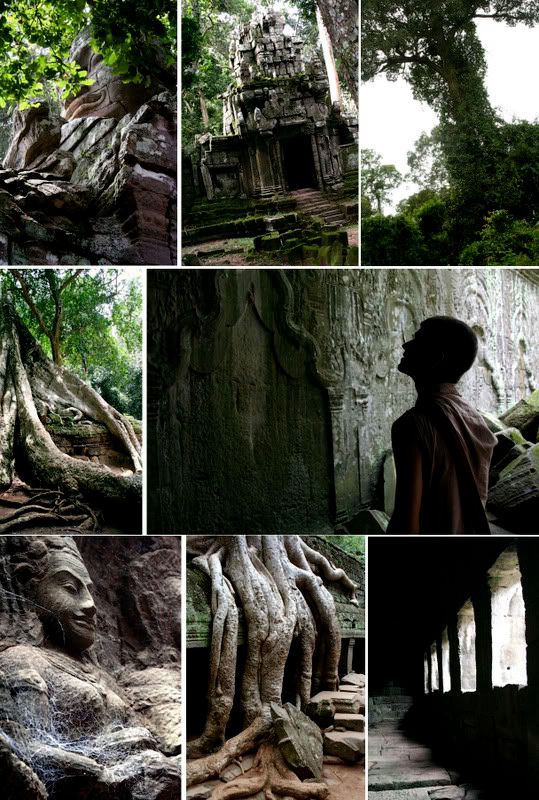
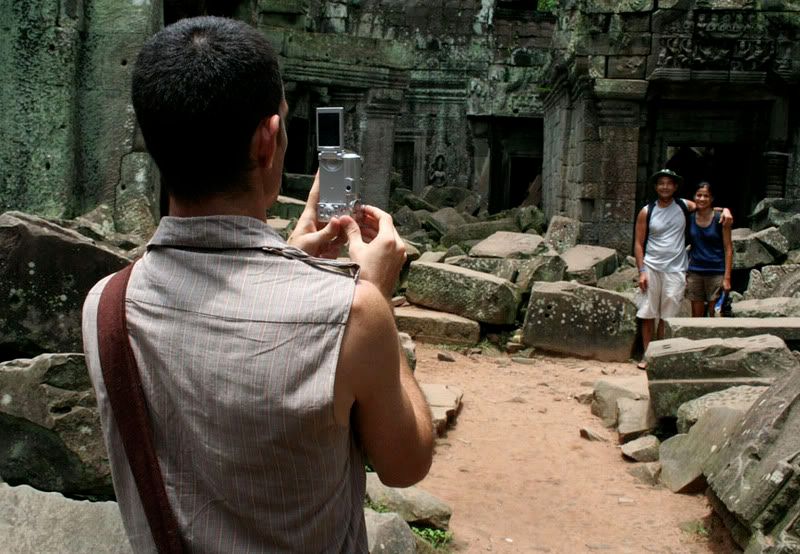
Travel writer Paul Theroux described visiting the Crac des Chevaliers, the crusader fortress in central Syria, as like being in the castle of his childhood fantasies. I never fantasized about castles or knights as a child- I spent my time imagining mysterious temples in dark jungles, likely a product of repeated childhood viewings of Temple of the Forbidden Eye. I should be embarrassed to admit it, but it was partly this fascination with the mysterious exotic that initially lead me to pursue anthropology. Jungle hidden ruins like Angkor were the playground of my childhood imagination- so, like every other tourist in Cambodia, Angkor was at the top of my list.Amazingly for a place that I had wanted to visit since I was a child, the ruins of Angkor did not disappoint. Somehow, despite being a major tourist site, overrun with souvenir vendors and bickering families, Angkor has lost none of its allure. Some sites, like Angkor Wat and the Bayon, were astounding for their grandeur: they seemed more elegant and fantastic than any storybook castle. There were long causeways lined with stone elephants, and promenades with python balustrades.Many of the sites had impressive reliefs, still intact in vivid cartoonish detail. The walls of Angkor Wat told complex mythologies, of Rama's battle with Ravana. There were countless figures filling every inch of stone space: many-armed gods in chariots, and monkey-faced soldiers fighting among warring elephants. Far more interesting were the reliefs around the Bayon's outer walls. They showed a social history of Khmer life. There were fishermen rowing among giant fish and crocodiles; a circus scene, featuring a dog-like rhinoceros; and even women picking lice out of each other's hair.
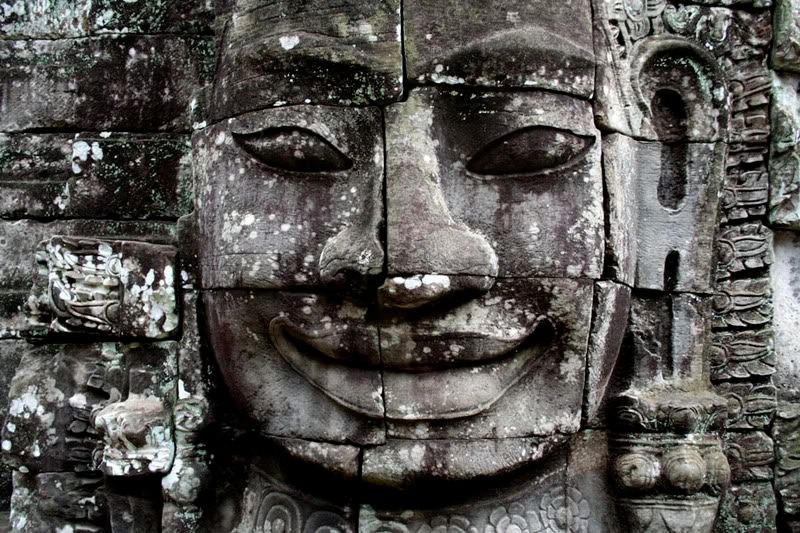
Several of the more intriguing ruins were still entangled in forest growth, with uneven doorways leading into darkened chambers. Vines and roots spilled over doorways, with the muscular girth of a coiled python's body. Smiling stone faces were veiled in dust and cobwebs. With their mossy walls and crumbling causeways, they had exactly the jungle atmosphere I had craved.
One of the best parts of visiting Angkor was interacting with some strange locals. On our first day in Angkor, an entirely naked 4-year-old boy marched up to Bordeaux and I. He stopped right in front of us, put his hands on his hips, made a sassy pout, and did some strange dance move that he must have gotten from a music video or a fashion show he'd seen on tv.
On our second day, during the sunrise at the Bayon, we were approached by a slightly off monk. He first asked where we were from, and hearing that I am from the US, suddenly began repeating "ah, George Bush!" He climbed onto a stone step, and raised out his arms. I at first thought he was taking the form of a bomber jet (to represent the US), but he began pointing at himself saying "Jesus Christo! Jesus Christo!" He came back to me, grabbed my sketchbook, and wrote out an extensive thesis, which referenced both Cambodia and the US, and involved the phrase (in Khmer) "christian+mormon+catholic", and which he dated and signed rather officially. I'm unsure of whether this was a prayer or some sort of unofficial pact, but I accepted it from him as solemnly as I could. As Bordeaux and I were leaving the Bayon later, we saw him again: he was smoking two cigarettes, and the carved parrot handle of his umbrella was smoking a third.

Thursday, July 19, 2007

Elephant Tower.

Compared to the relative ease with which Bordeaux and I got to Khao Yai in Thailand, getting to the national parks in Laos seemed like far more of a mission. Our guidebook- the rather dismal Rough Guide to Laos- gave essentially no information on getting into Phou Khao Kaouy, aside from advising that we take a tour. We almost dismissed the idea of going entirely, and began planning on heading directly to Southern Laos. Thankfully, while walking up Vientiane's Lane Xang, Bordeaux and I came across the Laos tourism office. There, they gave us information on the park, and recommended to us Ban Na village, where they offer treks, homestays, and a night in an elephant tower. The staff at the tourism office were even able to give us detailed information on getting there by public transport.
The trip to Ban Na by public transport was rather easy- we caught a bus to Ban Phabat, and then walked 2 km to the village, where we were greeted immediately by a guide. While we filled out registration forms and waited for the trek to start, we had time to take in the village. There were several women making baskets, men working in the fields, and children playing hopscotch. One small girl competed with me in making odd faces, and two boys tried to impress us by doing strange tricks on their bikes.
From the village it was a 4 km walk to the Elephant Tower. We first crossed through rice paddies and bamboo groves, crossing bridges built of thin planks and bamboo poles. Past the cultivated land we entered 'elephant territory', a scrubby green woodland. Though the guides didn't speak much English (and we didn't speak any Lao), they were friendly and extremely personable, and pointed out the strange insects, tiny frogs, and snakes that crossed our path.
The tower was fairly basic, but well set up. There was a stream below the tower, where we were meant to bathe. The water was cool, fresh and clear, with a shallow rocky bed- perfect for cooling off, until Bordeaux spotted one of the seven-inch leeches wriggling toward us. For dinner our guides fixed a large tasty meal of noodles and sticky rice. After eating, they went through a book of animals with us, asking the English names for some of the birds and mammals in the area, teaching us the Lao names in return. At bedtime they set up mats, sleeping bags, and mosquito netting, and switched off the lanterns. A storm was growing in the distance, and lightning silently flashed over the forest. We fell asleep to the sound of rain on the metal roof.
So, we saw neither elephants, or any large animals. It was certainly disappointing not to see any of the elephants, but even so, the experience of the tower was well worth it. The forest around the tower was beautiful- huge trees and bamboo thickets. Additionally, the Elephant Tower has been set up as a source of income for the village, and many people in town are involved. By visiting, it can promote the development of conscientious tourism in Laos, allow villagers to develop income from the wildlife that destroys their crops, and hopefully encourage more tourism opportunities in Laos' wild places. But above all else, the experience of being in the forest canopy was incredible, particularly at night, when we were surrounded by the humming of insects, the chirping of bats, and the soft steady rhythm of the rainstorm. It gave a unique chance to see Lao village life, and to experience the nighttime rhythm of the jungle.

Monday, July 16, 2007

Kayaking to Vientiane.

One day in Vang Vieng was enough for me. The fog shrouded limestone karsts that surrounded the town, looking like mountains from a Chinese watercolor, were certainly incredible. And the shallow brown river that curved below them, perfect for a day of inner-tubing, created a relaxing atmosphere. But Vang Vieng itself was a bit dire. Walking down the dusty main street at night, we were often assaulted by the canned laughter of three or more different restaurants playing Friends dvds, trying to lure in customers.

Rather than taking the bus out of Vang Vieng, Bordeaux and I decided to take a kayaking trip. We wouldn't be able to kayak the whole way down to Vientiane, but a number of companies offered a day trip, featuring several hours kayaking, followed by a bus transfer to the capital. After comparing a few of the tour companies in town (which all have exactly the same information and, within two or three dollars, the same prices) we signed up with Riverside Tours.
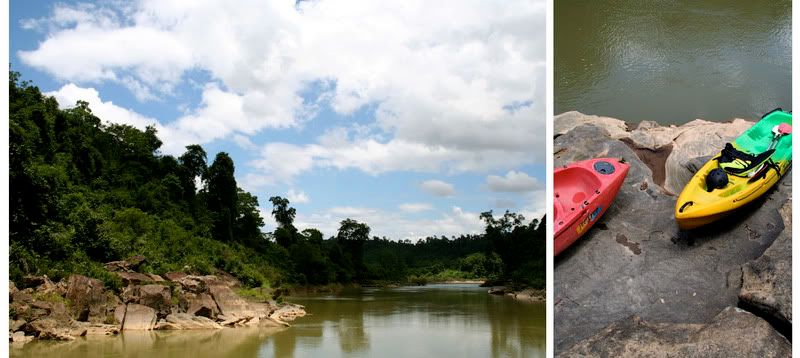
After a winding, speeding journey down the curvy mountain roads out of Vang Vieng, we were dropped off in a small town on the Nam Lik river. Altogether there were only nine of us on the tour, led by three guides. After a short introduction, we got into our helmets and life-vests and pushed off into the water. Fairly early into the trip we encountered some small rapids- the splash of waves helped to cool off the already baking sun. Further on we encountered grade 3 rapids, with larger waves and whirpools that first pulled us in and then quickly shot us out. Past the jagged rocks and white water the river calmed, and we were able to more fully enjoy the forest around us. It was amazing how pristine the area looked- aside from the occasional bamboo fishing pole left at the riverside, we felt completely isolated in the forest.

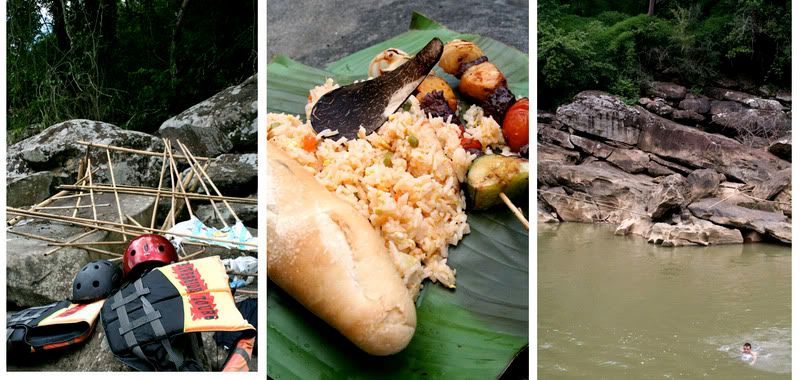
After about an hour of kayaking, we stopped to rest and have lunch. Two of the guides cooked while the rest of us swam in the river. The temperature of the river was perfect, a nice relief from the warm air and beating sun. Lunch was served on slices of banana leaves. For having carried all of the food with them in their kayak, the guides produced an impressive lunch- grilled chicken and beef skewers with vegetables, fried rice, and a baguette, which is practically obligatory in Laos. A small rainstorm settled on us as we finished lunch, soaking us just after we'd been able to dry off. When the blue finally appeared over us again, we quickly got back into our kayaks and started off on our last leg of the trip.
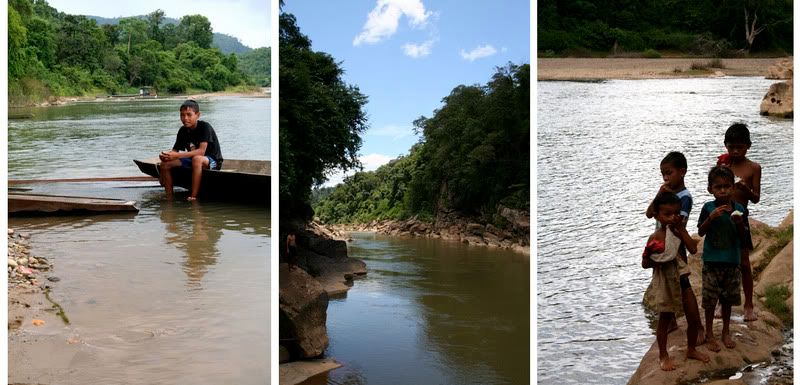
The final hour of kayaking was on the open, calm waters of the river as it widened out. Without any rapids or rocks, we could study the jungle that surrounded us. There were truly massive trees, with thick curtains of leafy green vines hanging from their limbs, and muscular roots gripping onto the rocky shore. Dragonflies hovered over the surface of the water, before settling onto the abandoned bamboo fishing rods that littered the shore. We ended our trip at a rocky beach, where a group of kids were busy sharing an orange.

Wednesday, July 11, 2007

Mekong.

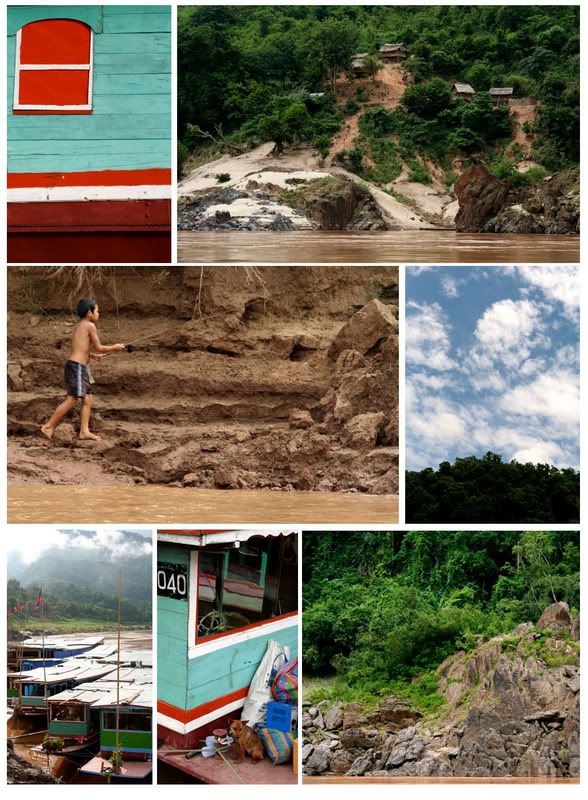
Tropical waterways have always held a mysterious fascination for me. So though I was excited to be visiting Laos for the first time, I was even more excited by being able to travel by down the Mekong, the largest river in Southeast Asia.
My first sighting of the river was in darkness, as Bordeaux and I sat down for dinner on our last night in Thailand. It appeared as solid darkness, a non-form breaking up the edge of Thailand and the distant twinkling lights of Laos. We drank our last Chang over it, sipping away our beer as the river silently slipped past.

I saw the Mekong properly as we came down for breakfast the next morning- a thick, muddy river being scratched by the early morning activities of ferries and canoes. After taking a small wooden ferry across the Thai-Laos border, we got our passports stamped and bought our tickets for the two-day slowboat down to Louang Phabang. We waited for the slowboat outside a convenience store, where we were joined by several English students on their gap year, a young French couple, and a loud, obnoxious Australian, who wore green crocs and a loose tank-top that showed off his grey back-hair.
After clearing our passports again, we were allowed to board ship. The slowboat is a strange vessel, appearing almost like the first floor of a wooden shophouse, painted brightly and set to float on the water. In the front of the boat was a short curving deck, on which sat a pile of cargo, a small dog, and a garden of potted plants. Once onboard, we found that most of the space had already been taken, and we were forced to sit uncomfortably on one of the few wooden benches left. The English gap students sat in front of us, joined now by an awkward Scandinavian. As the boat continued to fill up, passengers were forced to squeeze in, sit on the floor, or pile in with the luggage. Despite the fact that we were already packed full, more tourists kept appearing on the dock, and the transport officials kept insisted that there was only going to be one boat. Somehow the seating arrangement around us shifted, and suddenly the obnoxious Australian was sitting two rows ahead of us, doing his best to charm the group of eighteen-year-old British girls. It was too much to have to share the company of the Mekong with such an annoying person, and I numbly accepted that this was going to be a miserable seven hours. Another slowboat drifted up next to us, and it became clear that another boat was going to be making the trip. I shoved my backpack to Bordeaux. "Go get us space on that boat- I'll get our luggage."
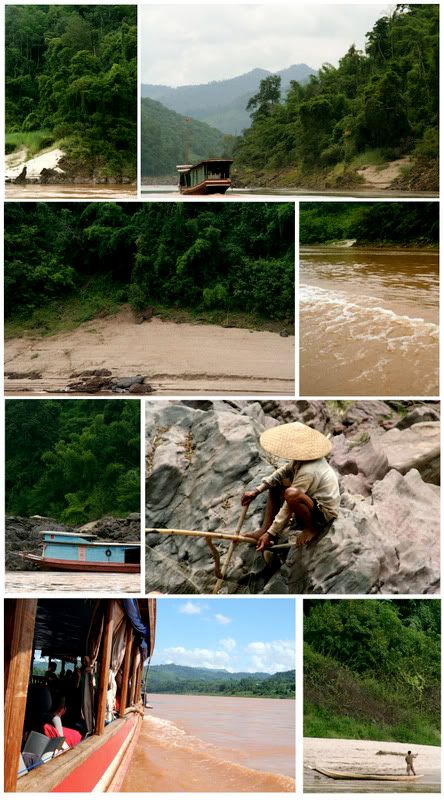
He managed to reserve a nice stretch of the floor for us- once lined with cushions it became a comfortable place to stretch out and relax. We spent our first day relaxing, reading or leaning back against the side of the boat to nap. We drank warm beer Lao, a toast to our trip on the mekong. Occasionally I stood to enjoy the view- the farmed green hills around Houayxai gave way to a massive wall of jungle, which rose above us on either side of the smooth brown river. Occasionally a white sand beach or an island of craggy rocks would interrupt the green and brown monotony.

We spent that night in Pakbeng, a small river town whose main function is sheltering travels in between legs of the journey. The first hotel we checked into, recommended by the increasingly failing Rough Guide to Laos, was a pile of concrete and bamboo boxes that seemed likely to slip into the river. The room was tatty, with ragged bedsheets over a twisted mattress. The hotel was noisy and crowded, mainly filled up with gap-year students who likely had the same Rough Guide as us. Taking the guidebook's word that this was one of the best places in town we consigned ourselves to the room, and went to take a shower. Once the florescent light flicked on, we realized that our bathroom was connected to the next hotel room, the two being divided by a low cinderblock wall. When we realized that the shower didn't work, we asked to switch rooms. The manager showed me another room- I checked the shower, and found that it worked, but to the effect that the shower-head flew off any time we turned on the water. I asked to see another room, but they insisted they were full- though as Bordeaux and I got our bags and left, they suddenly seemed to have another room to show us. We found a much nicer hotel across the street for the same price. The room was cleaner, with new tile floors, white walls, and clean crisp sheets and towels- and incredibly, the shower worked perfectly.
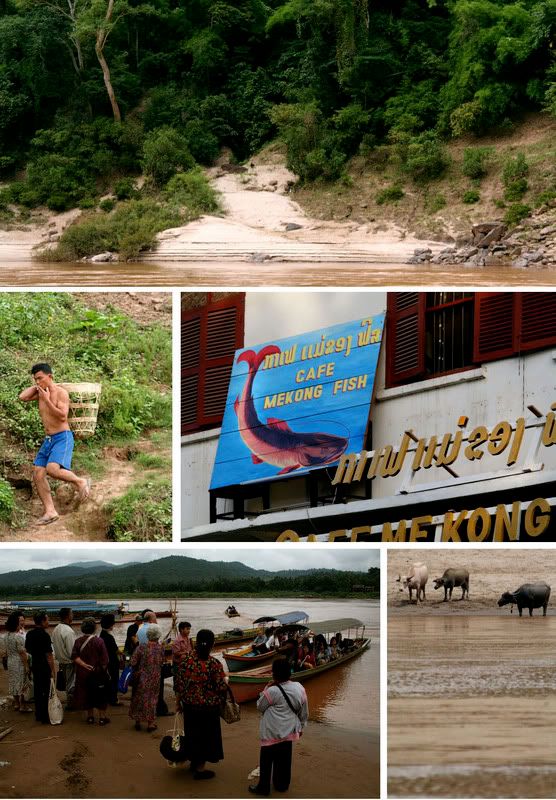
The next day we woke early to secure two of the slowboat's very limited comfortable seats, which seemed to have been lifted out of minivans and screwed into the wooden floor. The journey on the second day was even more incredible, as we were now able to enjoy the view. In the early part of the day the river was thin- a slim channel of coffee-colored water passing between the forest, which rose 200 feet on either side of us. The jungle was lush and green, with huge leafy vines swallowing up entire trees. Where there was a break in the greenery it appeared as a wound in the forest, with bleached white tree trunk skeleton showing through. From within the thicket came the whining siren-buzz of insects, the labored breathing of the forest itself. The immensity of the jungle was overwhelming, and any canoes or boats that passed near the shore looked ridiculously out of proportion, appearing tiny before the immensely overgrown jungle. Occasionally the forest would relent, breaking open to show a small village of bamboo houses and sheet-metal roofs. Sometimes we would stop at these villages to pick up cargo or passengers. Most other times we drifted by without acknowledging the town at all, and the fishermen and water buffalo that we passed appeared to us simply as silent vignettes of rural Lao life.

Monday, July 02, 2007

To Mae Hong Son and Back.

Despite it being the start of the rainy season, Bordeaux and I decided to rent a motorbike to take a circuit trip of Northwest Thailand. It would give us a chance to get away from the major towns and tourist centers, and to explore some small towns and parks on our own.

Weds June 27
We left Chiang Mai early in the morning, leaving most of our luggage at the guest house. Despite being a fairly small town, the suburbs of Chiang Mai seemed to stretch on for some distance, petering out in small wooden shophouses and quiet noodleshops. Eventually we were surrounded by rice paddies, where men plowed and lazy water buffaloes wallowed. About 40 kms out of Chiang Mai, we felt the first drops of drizzle. We pulled to the side of the road to prepare ourselves for the rain, and as we dressed ourselves in on our cheap plastic raincoats, the water began coming down in hard waves. We waited under the shelter of a grove of trees, hoping the rain would die down. Eventually we had no choice but to try our luck driving through the weaker patches of drizzle, hoping the hard rain wouldn't return.

Through cover of heavy mist we reached Doi Inthanon national park. Unlike Khao Yai, which is monsoon seasonal forest and thus spends half the year dry, Doi Inthanon is cloud-forest, and spends the entire year heavy with rain and mist, sheltered by dense clouds. Because of this, the forest is able to grow to incredible height, with curtains of elaborate creeping vines and crowds of oversized leaves. Plants grew leaves of ridiculous, cartoonish sizes. We admired them as we raced up the slick asphalt roads of the park, past columns of thick dripping forest and distant clouded mountains.

We spent the night in Mae Chaem, a quiet riverside town. After trying two closed guest houses, we finally found a room in a guestless resort. Our sterile bungalow felt of mildew, and the towels we eventually located in the cabinet were already damp. We searched for dinner at the quiet night market, but eventually opted instead for spicy sour soup from an open air restaurant in town.

Thurs June 28

From Mae Chaem, we traveled to Khun Yuam. The road was mostly uphill, and the bike guzzled the petrol to make it. At a high curve on a mountain road, we realized that we were going to run out of gas soon. Thankfully, we were able to make it to the next small town, but once there we found that they had no gas stations. Bordeaux tried approaching a couple, but the man went and busied himself below their stilted house as soon as he saw us approaching, and the wife just shook her head apologetically, indicating that she didn't understand us. Eventually we found a group of men who understood us, and they sold us a liter of gas from their truck.

We had few guesthouse options in Khun Yuam, so we took a room at a bland travelers hotel. After taking a shower, we realized that we were sharing our bathroom with another guest, a massive cockroach. To understand the size of this cockroach, you can't use any sort of domestic American cockroach as a reference. This wasn't a chubby, comfortable suburban cockroach. This was a creature of the jungle. It was about four inches long, with strong wings forming a battle shell over its angry musculature. It resisted all attempts at its life, finally escaping down a drain that we quickly shut behind it.

Thankfully, the town of Khun Yuam was rather more pleasant than our guesthouse. The main street in town was lined with old wooden shophouses, which sold fresh tropical fruit, wooden birdcages, and plastic toys and bikes. We ate a delicious afternoon snack of chicken amok served in a banana leaf package, and spent the afternoon watching a herd of lazy buffalo wallow and play in a field like dogs.

Fri June 29
We ran into another herd of water buffalo the next day on the road, as we curved through a forested pass on the way north. They studied us with suspicion, their heavy wooden bells clinking as they sniffed the air. The road to Mae Hong Son was rough, showing signs of the incredible rains it receives. The asphalt highway disappeared in places, giving way to muddy detours and rough patches under construction.

In Mae Hong Son, we found our first guesthouse with character, Pana Huts. The small bamboo rooms were perched on stilts over thick jungle growth, and the wild growing garden was filled with the sounds of birds and the drill of cicadas. Looking out the window, we saw the movement of leaves and grass outside. A strange creature passed by- we couldn't tell exactly what it was, but saw what looked like wasp wings and spider legs. Bordeaux went outside to look, and found that it was a fat brown spider, carrying the body of a giant dead wasp through the undergrowth. Inspecting our room, we found another brown spider, about the size of my palm, living in the drapes.

The town of Mae Hong Son was a busy provincial capital, with a few concrete hotels and stores erected among the mainly wooden houses. It had the feeling of a mountain town, with timber buildings set on the slope of hills. We bought snacks from the busy local market, including a small loaf of banana bread and an amok made with lemongrass and pork. The best restaurant we found in town was the Salween River, which sold freshly ground hilltribe coffee, home baked bread, and a menu including several regional Shan dishes. From inside their wooden shuttered doors, we could look up at the twin Burmese style chedis that graced the top of the hill.

Sat June 30

Halfway en route to our next town we stopped at Phang Ma Pa, aka Soppong. It was a rather small town, stretched into a thin strip along the riverside, that seemed mainly to cater to tourists interested in rafting and exploring the local caves. At the Soppong River Inn we were able to get french press coffee, which we hadn't had since leaving my Bodum in the states.

From Soppong, it was a relatively short journey to Pai. The town is a popular stop for backpackers, and has a rather unfortunate hippie feel. Thankfully it's the low season, so the town felt quiet and relaxed. The highlight of Pai was All About Coffee, a bakery and coffeeshop in a 140 year old wooden shophouse. Seating is up a short set of stairs, on pillows set at low wooden tables. The coffee was amazing- they offered both locally grown and international brews, and had the largest range of specialty drinks I'd seen in a private coffeeshop in Thailand.

Sun July 1

After spending so many days on the bike, we took the chance for a day of relaxation. Pai, despite its population of croc-wearing hippies, served that purpose well. Our room was in a wooden stilthouse, surrounded by a thick bamboo grove. We spent our day lazily enjoying the pleasures of the town. We drank yogurt smoothies in hammocks, looking looking out at rainy mountains, and took long walks past rice paddies and quiet houses.

Monday, June 25, 2007

Photographing Khao Yai.

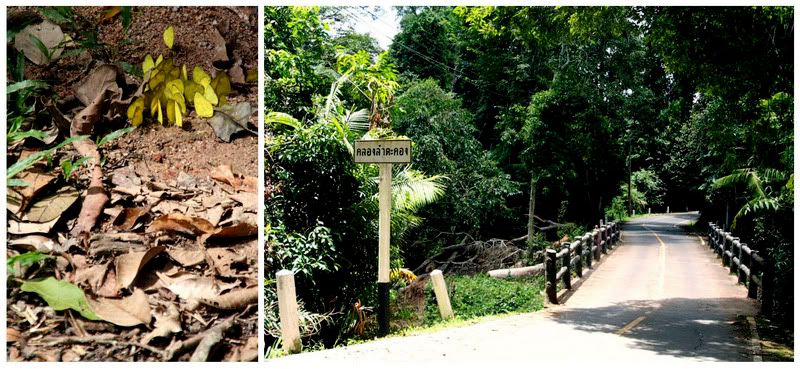
Leaving Bangkok last Sunday, Bordeaux and I headed north by train to Pak Chong, frontier town to Khao Yai National Park. After spending a night just of outside town, we took a public songthew to the Khao Yai park gate. There, we sat among our backpacks, and waited for a car to give us a lift in. The ranger at the gate kindly asked the driver of a pick-up for us; he nodded, so we hopped into the back of his truck. The journey into Khao Yai gave us a sense of what we'd see inside the park- unimaginably lush green towering forest, rising sharply from the edge of the asphalt road. The forest was beautiful and darkly mysterious, vines and stranglers swallowing tree-trunks and tangling into knots as they pushed up vertically. I had wanted to see the jungles of Southeast Asia for years, and this first taste didn't satisfy, but rather only managed to make me more intrigued and curious. Even the sudden downpour of steamy tropical rain couldn't distract me from studying the forest- I just pulled my cap lower, and held onto the truck tighter as I watched the green tangles enveloping me.
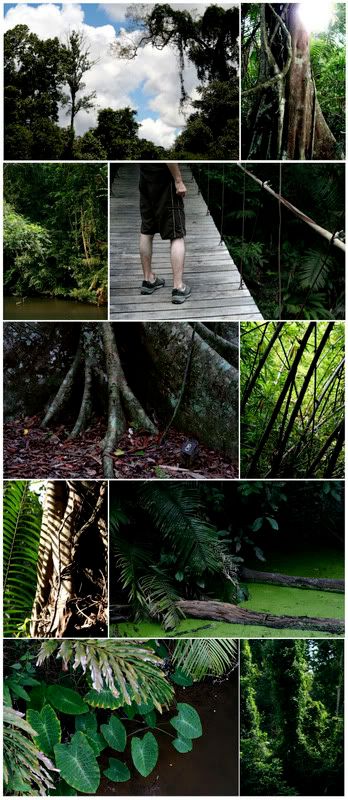
I've always been fascinated with jungles. They were not only the home of my favorite beasts, but in some way they represented all the darkness and danger and strangeness of the exotic world. So I was rather disappointed when I first traveled in Central America, and found that my photographs of jungles came out so poorly. As I found out, jungles aren't easy places to photograph. There are of course technical reasons for this, mainly the lack of light. There are also practical aspects that make it difficult for a photographer- the heat and sweat, and, on this trop, the constant battle against ground leeches climbing up my shoe. But there are other reasons, as well. To begin with, the forest is often just a mess of green, with few other colors standing out, so framing an interesting composition can be difficult. One option is to search for focal points- animals or flowers or landmarks- around which to structure a picture. But this rarely makes for an interesting photograph- the images come out like scientific stills of singular objects against a background of green. It's perhaps exactly because jungle have an aura of mystery that they're very difficult places to photograph. How do you capture the unknown forest though a medium that was developed to illuminate and illustrate? In the end, my decision was simply to stop trying to order my compositions. Instead, I tried to capture the disorder of the jungle through less planned out and framed shots. In the end, any order that resulted would be the forest's own, emerging in the lines of bamboo or the patterns of leaves.
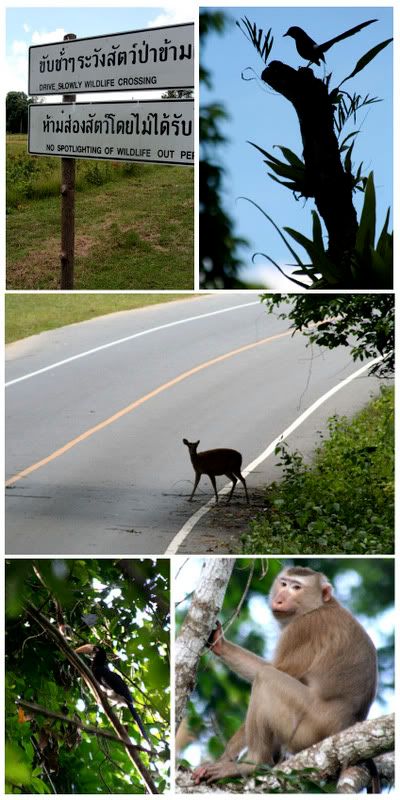
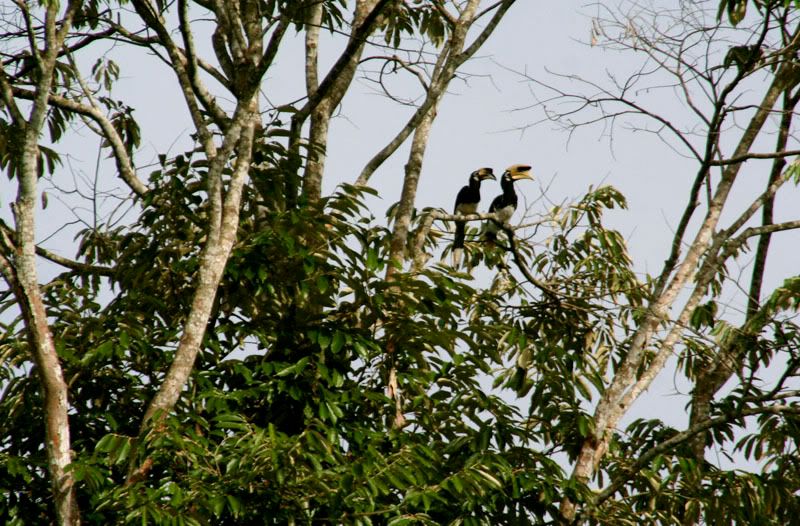
Photographing wildlife was just as difficult. We had come to Khao Yai expecting not to see much wildlife, but ended up being very lucky. Despite the number of incredible, strange creatures we saw, few sightings resulted in good photographs. The barking deer would dart into the forest if approached, flycatchers rarely waited in appropriate light, and macaques refused to sit still. While searching for our campsite on our first day at Khao Yai, Bordeaux and I were surrounded by the slow deep song of the gibbon. We stopped to listen, and noticed the movement of leaves in the trees nearby. Searching in the shadowy gaps between trees, we saw the silhouette of several gibbons swinging among branches. They were too quick and in too dark of forest to photograph, but the sight was beautiful- their strange, long arms swinging their bodies from one branch to another. Just as beautiful and difficult to photograph were the park's hornbills. They're not shy birds- they chatter and fight noisily, jump around clumsily on branches, and flap loudly from one tree to another. But they roost so high that even with a zoom lens it's hard to get a very careful shot of them. We saw several pairs of Oriental Pied Hornbills, large black and white birds that fight incessantly in pairs. We watched them follow eachother around, flying from the height of one tree to the next. While crossing a bog one afternoon, we heard the loud flapping of wings overhead, and watched as a Great Hornbill passed over us, golden feathers flashing. It perched briefly on a distant tree, it's huge yellow casque shining brilliant, before taking off again.
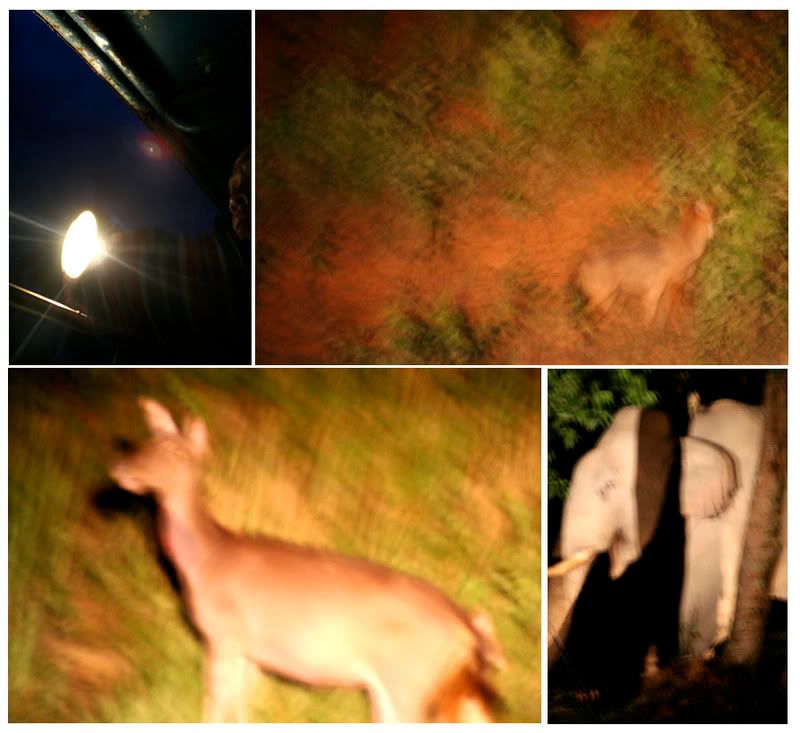
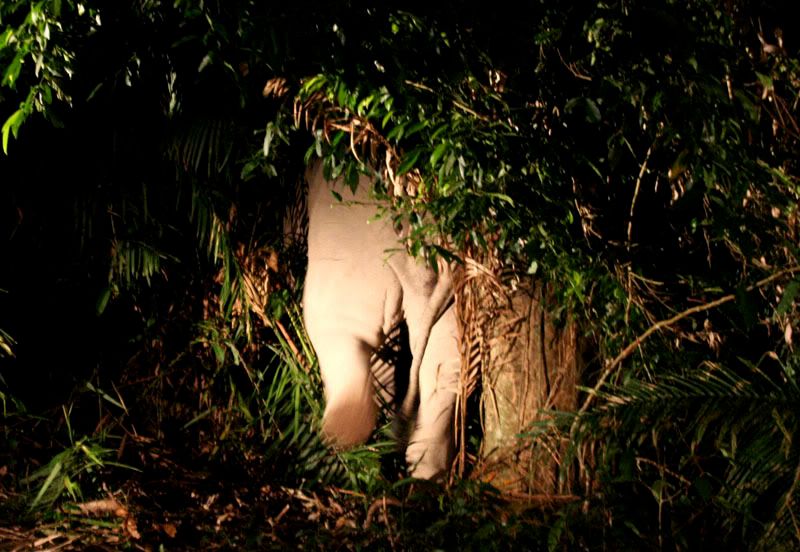
The greatest opportunity for seeing wildlife, the night lighting, was also the worst for photography. For 40 baht (about one dollar), you sit with five or ten other people in the back of a moving truck, watching as a guide flashes a spotlight around the jungle. It was awesome. The jungle is beautiful at night, even more obscure and elusive than in the day, with just the nearest leaves and tree-trunks emerging from darkness as we passed through. We saw an incredible number of animals on the first night drive- sambar and barking deer out grazing, civets enjoying a late meal, and a dhole (Asian wild dog) hiding among the grasses. When we returned to our camp from the first night drive, their was a Malayan porcupine waiting for us. As we moved toward our tent it walked past us, foot-long quills swaying. We were also lucky enough to have two elephant sightings, neither of which produced a good photograph. On the second night we saw a young bull elephant that was apparently angered by the light from our truck- it charged at us, so we quickly sped off without taking any photos. The other elephant was peacefully browsing, but as we stopped behind it, it put down its trunk and slipped into the forest, disappearing between vines and branches more effectively than one would think any elephant could.